


Chaliponga and the clarity of visions
In the plant traditions of the western Amazon, Chaliponga is valued for the clarity it is believed to bring to ceremonial visions. Known also as Chagropanga, its leaves belong to practices in which seeing, learning and communicating with spirits are closely connected. Our whole Diplopterys cabrerana leaves come from Napo, Ecuador, a region with a documented tradition of working with this plant.
Runa and Cofán visionary traditions
Among the Quichua-speaking Runa of the upper Napo, the vine is known as chali panga huasca. Its leaves are included in ayahuasca ceremonies because practitioners believe they make the visions clearer. Ethnobotanists describe this role as an admixture: a plant included alongside the principal ayahuasca vine, Banisteriopsis caapi.
In Runa accounts, the practitioner mediates between the community and a world of spirits and souls. Ayahuasca ceremonies are understood as a means of entering into those relationships. The visions have significance within the practitioner’s responsibility to interpret and engage with that unseen world.
The vine also belongs to the cultivated landscape. It has been recorded growing in an old Runa house garden after the surrounding vegetation had returned to secondary forest. More recent work with the Kichwa community of San José de Payamino records the same species as yaje panga, a cultivated plant with a place in shamanic rituals.
Among the Cofán of eastern Ecuador and Colombia, the leaves were recorded under the name oko yaje. Practitioners described their purpose as intensifying visions and making them last longer.
The character of the whole leaves
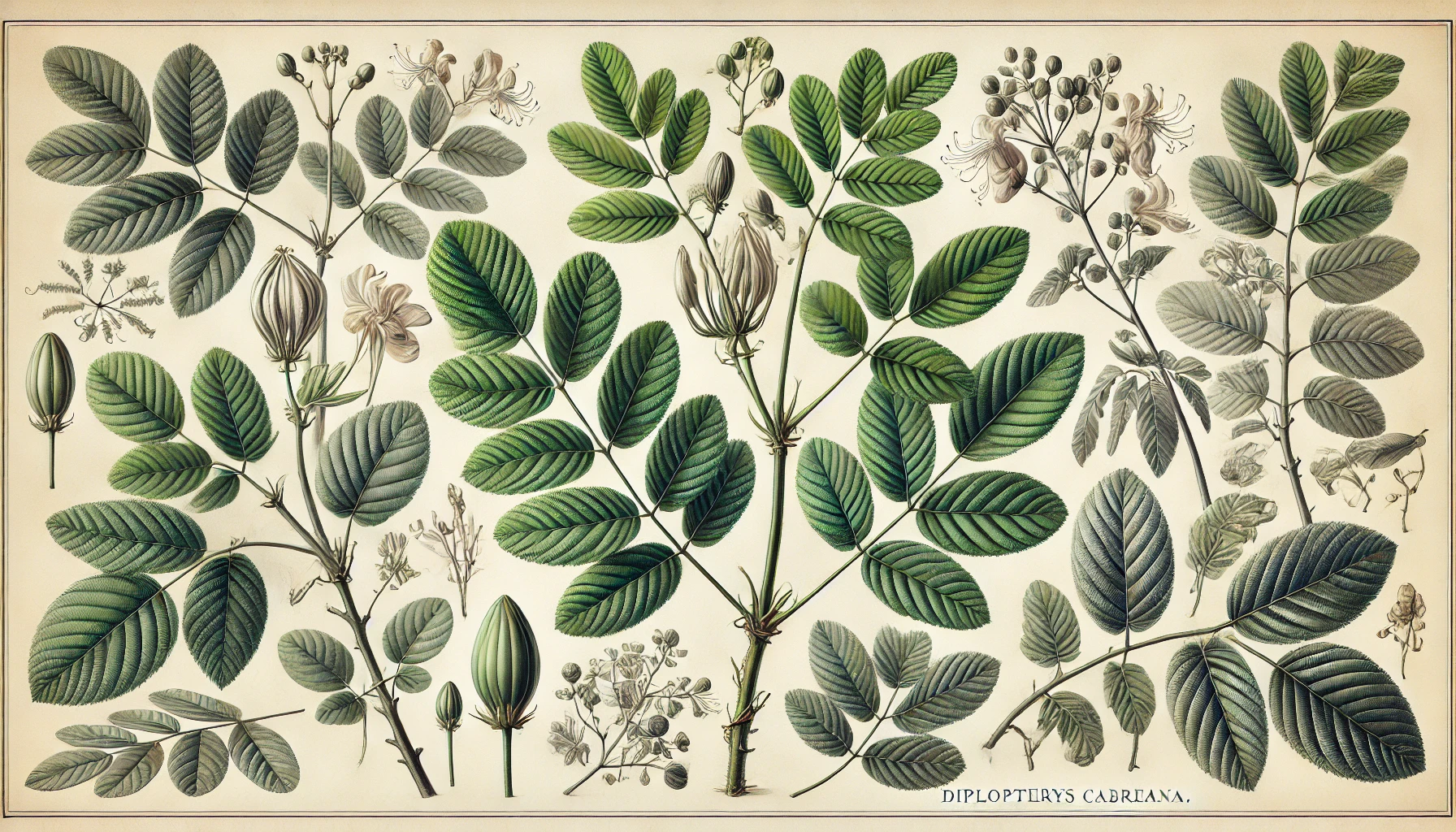
Chaliponga is a woody climber in the Malpighiaceae family. Its broad, leathery leaves end in a long point, with prominent veins beneath and minute glands along the margins. On the living vine, they occur in opposite pairs. The pointed outline and branching veins remain recognisable in the whole-leaf form.
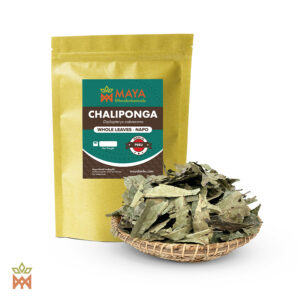
Maya’s Ecuadorian Chaliponga is supplied as whole dried leaves. Our range is organically grown, sustainably harvested and sourced through fair trade. Keep the leaves well closed in a dry place, protected from direct sunlight and unnecessary crushing.
Leaf chemistry and traditional knowledge
Chemical analyses have identified N,N-dimethyltryptamine, usually called DMT, as the principal active compound in studied Chaliponga leaves. DMT is a psychoactive tryptamine alkaloid. Although Chaliponga and Banisteriopsis caapi belong to the same plant family, their characteristic chemistry differs: Chaliponga is associated with DMT, while the caapi vine is associated with beta-carboline alkaloids.
This helps explain why botanical accounts distinguish the leaf’s role from that of the principal vine. The research concerns the material tested; it does not establish a fixed strength for every harvest or demonstrate a therapeutic benefit from these leaves.
Explore our Chaliponga collection, which also includes whole leaves from Peru.
Selected references
- Kohn (1992) — Runa ceremonial knowledge and the chali panga plant record from Napo.
- Doyle and colleagues, with the community of San José de Payamino (2019) — yaje panga, plant entry 27.
- Pinkley (1969) — Cofán accounts and research on the constituents of ceremonial plants.
- Gates (1982), New York Botanical Garden — botanical description and historical names.
This product is sold as a botanical specimen. Information on traditional, cultural and reported uses is provided for educational and ethnobotanical purposes only and is not a recommendation for any particular use. This product is not intended to diagnose, treat, cure or prevent any disease.
Andrej (verified owner) –
It goes well with Ecuadorian Red Ayahuasca 😉
Same tribe, same region and clear intentions from every side led to the holiest Yagé medicine.
Thanks to everyone involved. May all be Well 🙏