
Overview / Benefits
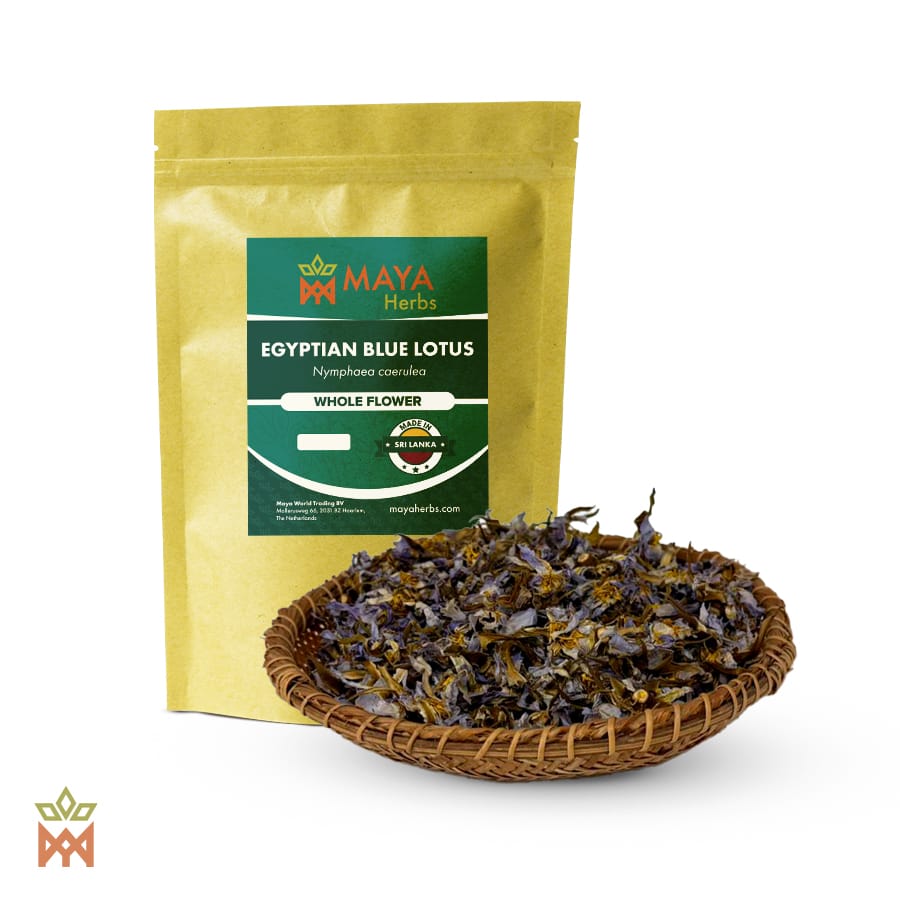
Egyptian blue lotus flower, botanically known as Nymphaea caerulea, is one of the most recognisable flowers in the world of ethnobotany. Often prepared as egyptian blue lotus tea, this whole flower has a long cultural history and is valued today for its gentle, relaxing character, aromatic floral profile, and ceremonial appeal.
Many people seek the egytpian lotus effect for moments of calm, reflection, and well-being. Traditional and modern herbal interest often centres on its soothing, mildly euphoric reputation. Research suggests that Nymphaea caerulea contains naturally occurring alkaloids, including aporphine-related compounds, which may help explain why the egyptian lotus flower has remained culturally important for so long. Scientific evidence on human use is still limited, so it is best approached as a traditional botanical rather than a medicinal product.
If you are comparing the Difference Between Egyptian Blue Lotus and Asian Blue, the main point is botanical identity. Egyptian blue lotus usually refers to Nymphaea caerulea, an African water lily associated with ancient Egypt, while “Asian blue” products may refer to other blue water lilies such as Nymphaea nouchali. This is why the query egyption blue lotus vs asian blue lotus matters: appearance, aroma, traditional context, and phytochemical profile can differ depending on species and origin.
For those exploring related botanicals, our collection of Blue Lotus, Dream Herbs, and Herbs offers a wider look at traditionally used plants chosen for quality and authenticity.
Traditional Use
The egyptian lotus flower is closely linked with ancient Egyptian art, ritual, and symbolism, where it was associated with rebirth, the sun, and spiritual awakening. Historical depictions show the flower in ceremonial scenes, and it has long been described as a plant of beauty, contemplation, and altered mood. Traditional use is often discussed in connection with infused wine, aromatic preparations, and floral steeping practices.
In contemporary herbal circles, egyptian blue lotus tea is commonly enjoyed as a floral infusion for evening relaxation or quiet reflection. While many modern users describe a soft, dreamy, or centring experience, these accounts are anecdotal rather than medical. The enduring appeal of Nymphaea caerulea lies in its cultural depth as much as its sensory qualities.
Preparation / How to Use
Whole egyptian blue lotus flower can be prepared in several traditional-style ways depending on personal preference. The most common method is as a simple tea.
Use 1 to 3 whole flowers, or the equivalent loose petals, per cup or small teapot.
Pour over hot water just below boiling.
Cover and steep for 10 to 15 minutes.
Strain and enjoy slowly.
Some people blend egyptian blue lotus tea with other calming botanicals for a more rounded flavour. It may also be used in bath rituals, floral blends, or incense-style herbal preparations where appropriate. Start with a modest amount to become familiar with the flower’s aroma and character.
Not for use during pregnancy, while driving, or before operating machinery. If you are exploring broader ceremonial botanicals, you may also be interested in our Herbal Blends.
Storage
Store whole flowers in a cool, dry place away from direct sunlight, moisture, and strong odours. A sealed glass jar or airtight pouch helps preserve colour, aroma, and freshness. When stored well, egyptian blue lotus flower keeps its delicate floral character for longer and remains better suited for tea or ritual use.
Sourcing & Ethics
At MAYA Ethnobotanicals, we value botanicals not only for their effects and history, but for the people and landscapes connected to them. Our approach prioritises small-scale ethical sourcing, careful plant identification, and respect for traditional plant knowledge. With a plant as culturally significant as Nymphaea caerulea, authenticity matters.
Clear naming is especially important when discussing the Difference Between Egyptian Blue Lotus and Asian Blue. Misidentification is common in the market, so we emphasise accurate botanical naming and transparent product descriptions. This helps customers make informed choices while supporting a more respectful and sustainable ethnobotanical trade.
Further Reading
Research on historical and cultural context: Blue Lotus – Lily of the Sun — https://www.herbalgram.org/resources/herbclip/herbclip-news/2020/bluelotus/
Research on archaeology and modern scientific interest: Investigating the psychedelic blue lotus of Egypt, where ancient magic meets modern science — https://news.berkeley.edu/2025/03/11/investigating-the-psychedelic-blue-lotus-of-egypt-where-ancient-magic-meets-modern-science/
Research on botanical identity: Nymphaea nouchali var. caerulea — https://en.wikipedia.org/wiki/Nymphaea_nouchali_var._caerulea
Research on modern overview and safety considerations: Blue Lotus Flower: Uses, Benefits, and Safety — https://www.healthline.com/nutrition/blue-lotus-flower

Reviews
There are no reviews yet.