


A root from Mexico’s mountain traditions
In the plant markets of central Mexico, Chilcuague’s identity is closely tied to its roots. Long, slender and pungent, they have been traded as a regional condiment and traditional herb under names that include raíz de oro, or golden root. Their unusual tingling character has made them a memorable part of local plant knowledge.
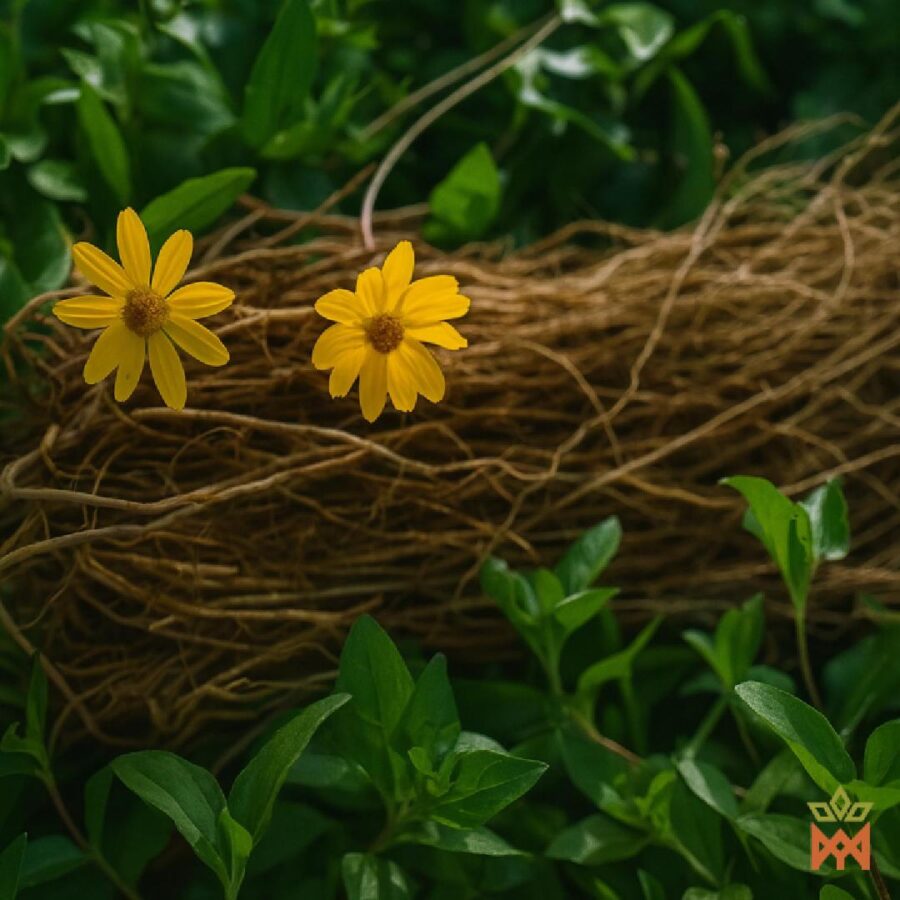
This product presents whole dried Chilcuague root from Mexico, retaining the natural form of Heliopsis longipes. The shape of the root, its regional names and the traditions surrounding it provide a direct introduction to the botanical behind Chilcuague extracts and other preparations.
A cordlike root from the Mexican mountains
H. longipes belongs to the daisy and sunflower family, Asteraceae. Above ground it carries yellow flower heads and opposite leaves; below ground it develops the narrow roots for which the plant is best known. Its well-documented mountain habitat includes the Sierra Gorda and Sierra de Álvarez, around the meeting of Guanajuato, Querétaro and San Luis Potosí.
The Nahuatl name chilmécatl combines references to pungency and cord. It captures both the root’s threadlike form and its forceful taste. Another regional name, pelitre, has also been applied to other plants, making the scientific name useful for identifying the actual species.
The root in regional life
An ethnobotanical survey of central Mexican markets recorded roots sold in bundles and smaller portions. In San Luis de la Paz, Guanajuato, the researchers documented burritos con chilcuague: maize preparations filled with beans or nopal and seasoned with the root.
Affinin and the chemistry of the root
The root contains alkamides, including affinin, also known as spilanthol, closely associated with its tingling character. Affinin and spilanthol are two names for the same substance.
Research comparing roots and leaves found affinin accumulating in the roots of the plants studied, alongside differences in the activity of genes involved in its production. This helps explain the botanical focus on the underground part. Whole dried root contains the plant tissue and its mixture of naturally occurring constituents.
The whole dried form keeps the cordlike roots recognisable, a feature reflected in the plant’s traditional name. Our Chilcuague collection explores the wider story and the other preparations made from the plant. Keep the dried root dry and protected from moisture.
Selected references
This product is sold as a botanical specimen. Information on traditional, cultural and reported uses is provided for educational and ethnobotanical purposes only and is not a recommendation for any particular use. This product is not intended to diagnose, treat, cure or prevent any disease.


Reviews
There are no reviews yet.