

Graviola leaves in Brazilian herbal tradition
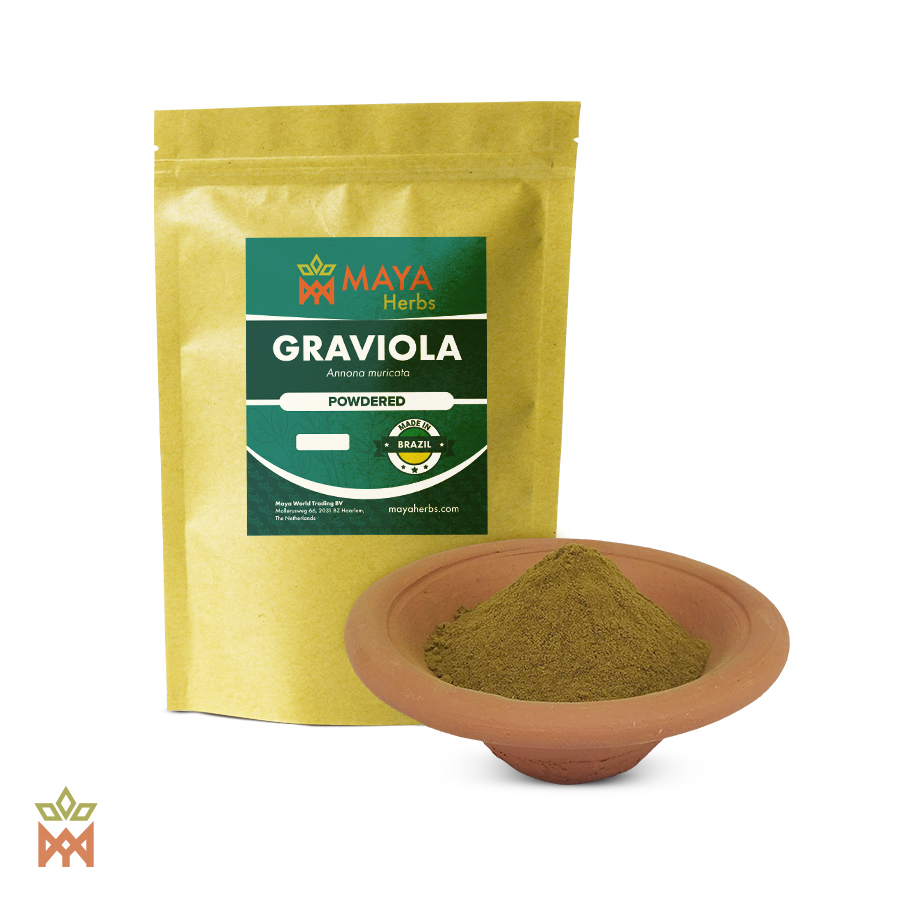
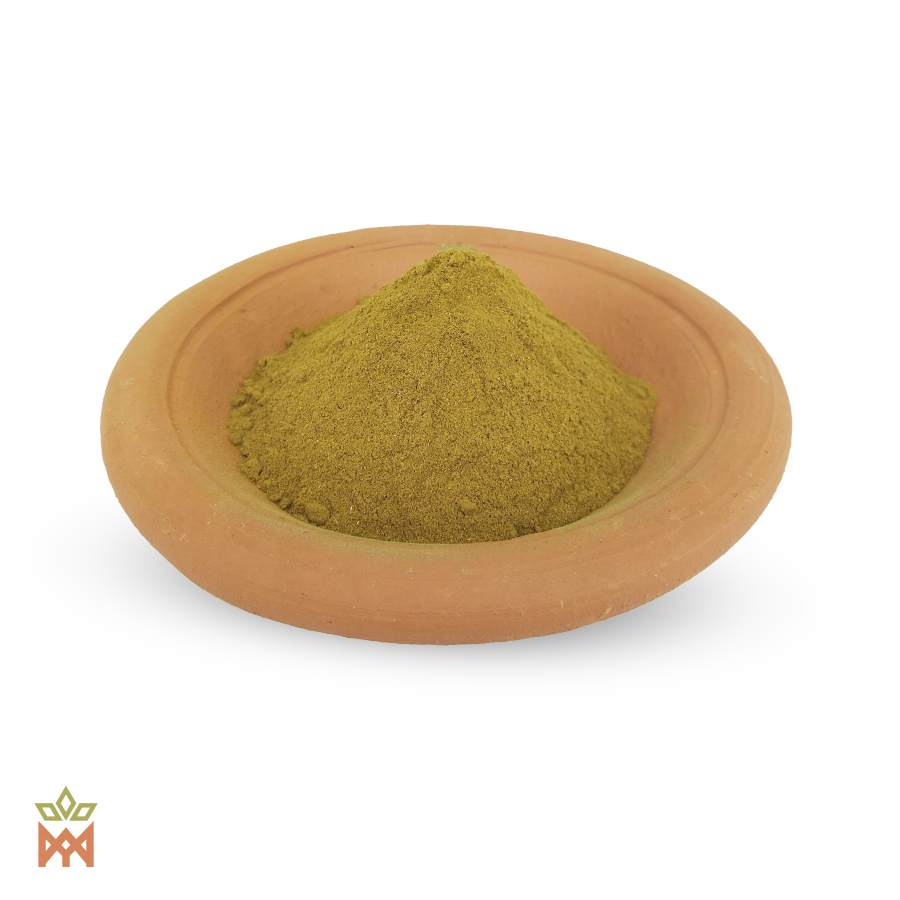
Graviola is best known for its large green fruit, but the leaves of the same tree have a separate history in household herbal practice. This product consists of finely powdered Annona muricata leaves from Brazil, gathered through small agroforestry cooperatives and dried in the shade before milling.
The tree is also called soursop in English and guanábana in Spanish. These names refer to the same species, a member of the custard-apple family, Annonaceae. The leaf powder is a different botanical material from the white fruit pulp used in juices and desserts.
A tropical tree with a wider story
Annona muricata is native to tropical America, with its native range recorded from southern Mexico to Venezuela and Peru. Cultivation carried it more widely, including into Brazil and across other tropical regions. The Brazilian origin of these leaves describes where this product is sourced; it does not limit the species’ history to one country.
Its glossy leaves and softly spined fruit make the tree distinctive in tropical gardens and orchards. Brazilian agricultural researchers have also documented its flowering and fruiting cycles, reflecting the importance of graviola as a cultivated fruit tree as well as a plant in local herbal knowledge.
The household use of the leaf
Brazilian botanical records describe traditional leaf teas. Comparable practices are documented elsewhere in the tropical Americas: in an ethnobotanical study on Grande-Terre, Guadeloupe, residents described graviola leaf infusions taken at night in connection with sleep and rest. This gives a specific setting to the plant’s reputation, rather than treating all communities as sharing one practice.
Such accounts preserve knowledge of how households used the tree. They do not establish a reliable sleep effect or show that a powdered-leaf product is suitable for unrestricted, long-term consumption.
Leaf chemistry and the limits of the evidence
Graviola contains several groups of compounds, including flavonoids, alkaloids and annonaceous acetogenins. Researchers have examined leaf extracts in laboratory and animal experiments. A Brazilian study published in 2010, for example, investigated an ethanol leaf extract in experimental pain and inflammation models. These findings concern a particular extract in animals, not clinical results from this leaf powder.
Acetogenins have attracted interest because they can interfere with cellular energy production. That activity also raises safety questions: effects on cells are not automatically beneficial effects in a person. A risk assessment published in EFSA Journal in 2020 highlighted neurotoxicity concerns and the lack of information needed to establish the safety of graviola supplement preparations. Observational associations do not prove causation, but they cannot simply be dismissed.
Laboratory findings are therefore no basis for presenting graviola as a cancer treatment or promising cellular protection. Medicinal use calls for qualified advice; the familiar use of the fruit as food should not be used to infer the safety of concentrated or repeated leaf consumption.
Store the powder in a cool, dry place away from sunlight. These shade-dried Brazilian leaves belong to our Well-being collection and to the household herbal history of a tree better known for its fruit.
Selected references
- Royal Botanic Gardens, Kew — Annona muricata: accepted name and native range
- Embrapa — Annona muricata: reproductive cycle and Brazilian leaf-use background
- Courric and colleagues — Ethnobotanical fieldwork on Grande-Terre, Guadeloupe (2023)
- de Sousa and colleagues — Ethanol leaf extract in experimental pain and inflammation models (2010)
- Raclariu-Manolica and colleagues — Risk assessment of Annona muricata in food supplements, EFSA Journal (2020)
This product is sold as a botanical specimen. Information on traditional, cultural and reported uses is provided for educational and ethnobotanical purposes only and is not a recommendation for any particular use. This product is not intended to diagnose, treat, cure or prevent any disease.

Reviews
There are no reviews yet.