
A bark with several histories
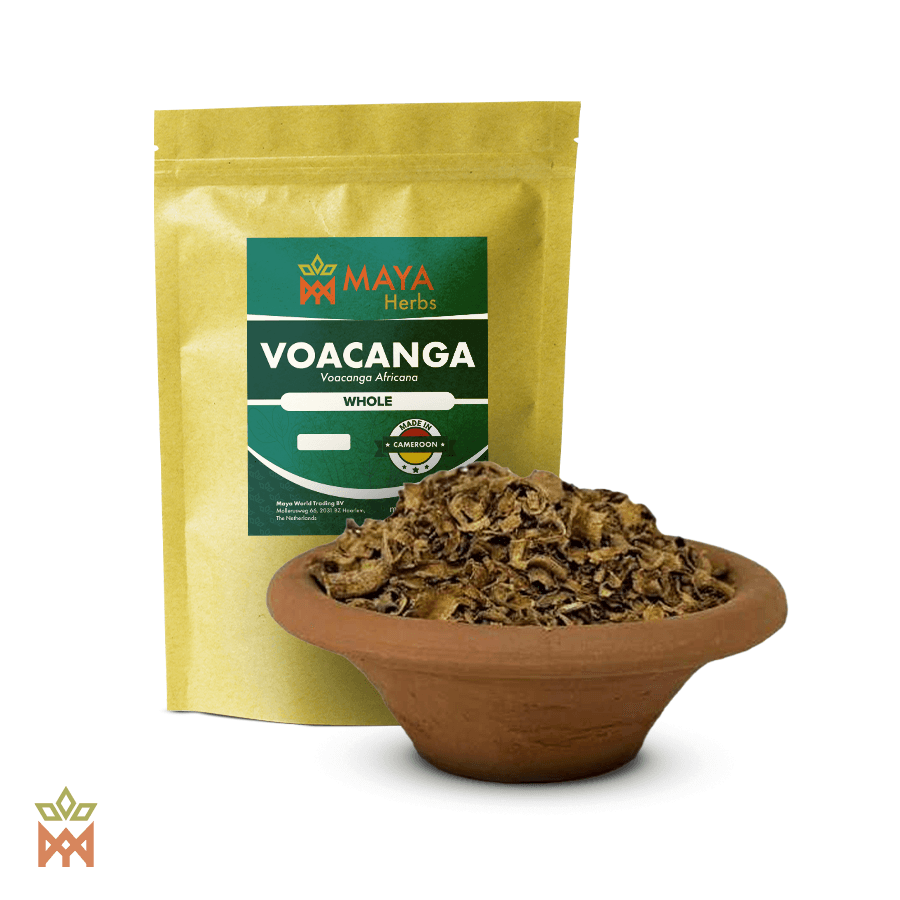
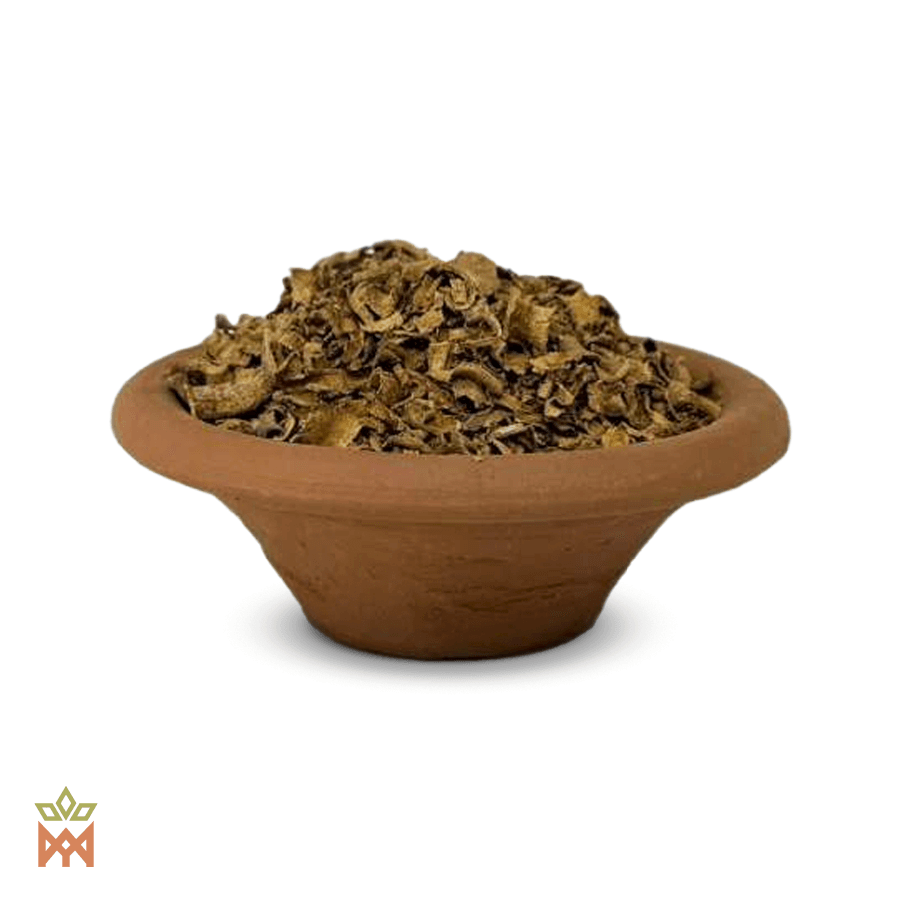
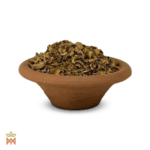
This shredded bark of Voacanga africana comes from Cameroon and is offered as a botanical specimen. Its coarse, fibrous form introduces a tree whose history includes traditional plant knowledge, practical materials and the chemistry of indole alkaloids.
Voacanga belongs to the Apocynaceae family and grows across tropical Africa. The living tree bears broad, opposite leaves, pale flowers and rounded fruits that develop in pairs, though sometimes only one matures. The fruits contain seeds surrounded by coloured pulp.
Fibre, wood and traditional plant knowledge
Voacanga’s place in African ethnobotany extends beyond its alkaloids. The reference work Plant Resources of Tropical Africa records bark fibre used for rope and, in Nigeria, yarn combined with other fibres for mat-making. It also documents the use of the wood for musical instruments in the Democratic Republic of Congo. Bark, latex, leaves and roots appear in different local medicinal traditions, each with its own material and context.
The bark’s fibrous character therefore has a practical history as well as a botanical one. These records describe uses of the species in particular regions; they do not imply that this Cameroonian specimen was harvested for those purposes.
A distinct alkaloid profile
Voacanga contains several families of indole alkaloids. In a study published online in 2020, researchers working with V. africana stem bark isolated compounds including voacangine, voacristine, coronaridine and the more complex voacamine. Their investigation combined chemical identification with laboratory biological testing. It establishes what was found in that study’s stem-bark material, rather than a medical effect of shredded bark.
The plant part is particularly important here. Published botanical accounts distinguish the chemistry of Voacanga seeds from that of its bark. A finding about seed constituents cannot automatically be applied to bark, and a root-bark analysis cannot define material labelled only as bark.
One constituent, voacangine, is known as a starting compound for the semi-synthesis of ibogaine. This explains some of Voacanga’s association with Iboga in botanical collections. The relationship is chemical: Voacanga africana and Tabernanthe iboga remain different species in different genera, with their own constituent profiles and cultural histories.
Sold solely as a botanical specimen, not for human consumption. Store the bark sealed, cool and dry, protected from moisture and away from children.
Selected references
- Royal Botanic Gardens, Kew — Voacanga africana: accepted name and distribution.
- Plant Resources of Tropical Africa — Voacanga africana: botany, materials and traditional uses.
- Babiaka and colleagues (published online 2020) — Identification and laboratory study of stem-bark alkaloids.
- American Chemical Society — Voacanga africana: chemistry, quality and pharmacological activity.

Reviews
There are no reviews yet.