

Damiana — an aromatic herb in Mexican tradition
Damiana’s small leaves carry an aroma much larger than their size suggests. In Mexico, Turnera diffusa is known both as a household herb and for its longstanding aphrodisiac reputation. Its story includes regional drinks, everyday herbal care and the livelihoods of people who gather and cultivate aromatic plants.
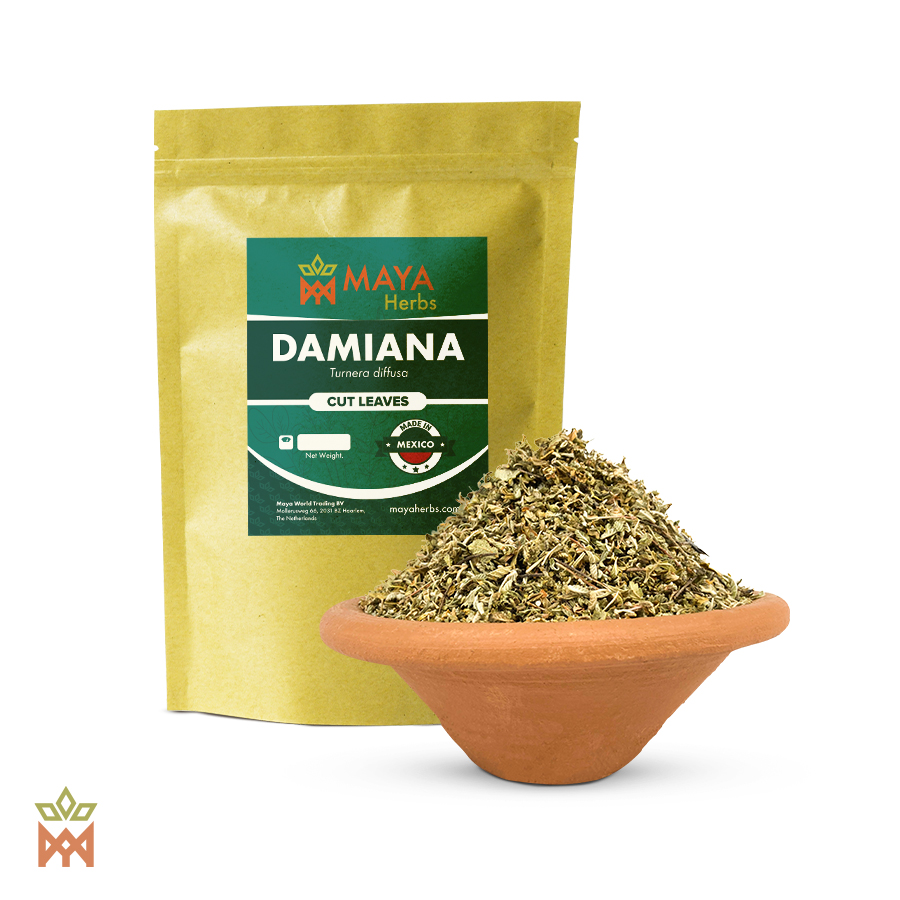
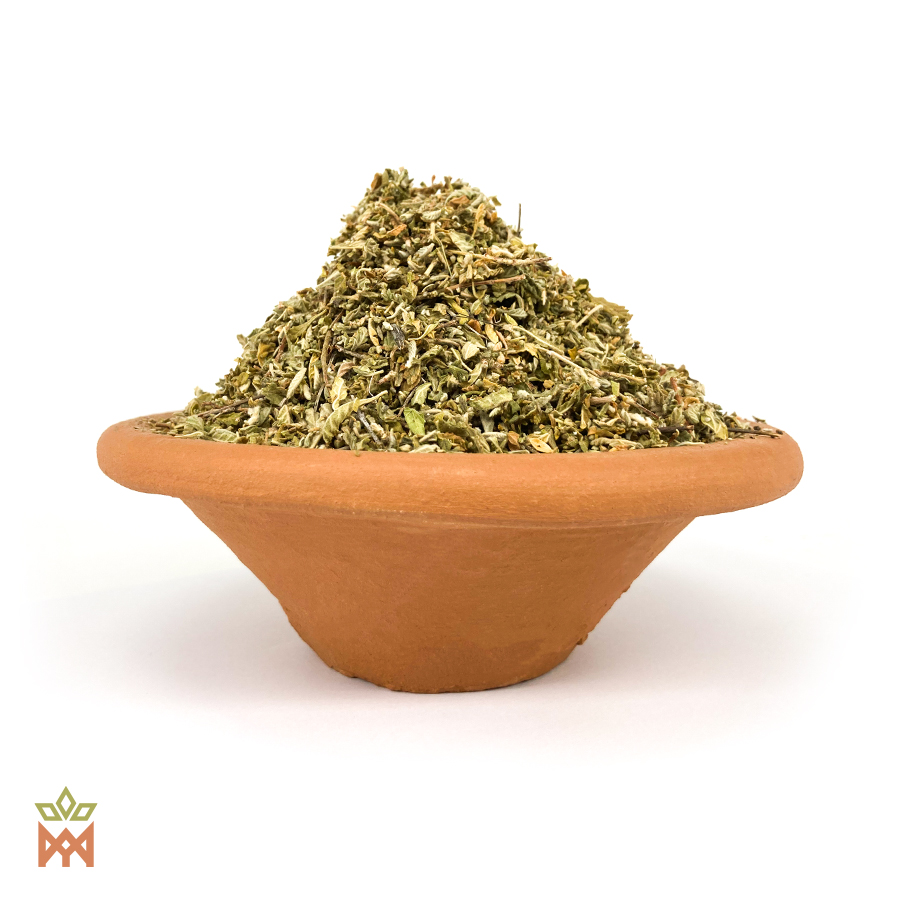
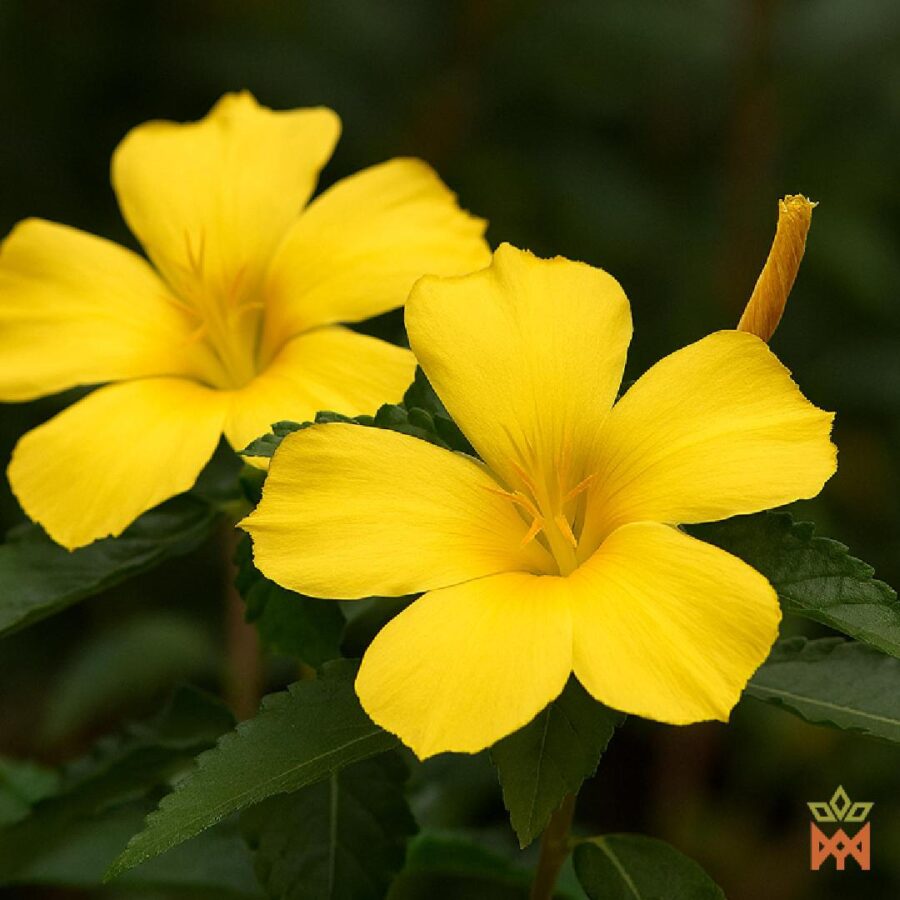
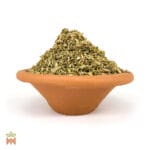
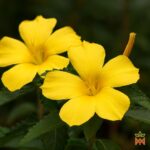
The plant is a low, branching shrub with small leaves and yellow flowers. It grows in dry scrub and other warm habitats across much of Mexico, with a wider distribution through Central America, the Caribbean and parts of South America. This cut herb contains the aromatic leaves and small stems of the plant.
A household herb in Baja California
In Baja California Sur, damiana belongs to a living regional tradition. Fieldwork published in 2018 among ranching communities in the Sierra La Laguna and San Blas–Las Cacachilas areas found it to be the most culturally valued of the plants recorded for everyday herbal drinks.
People described uses for warming the body in cold weather, for coughs and colds, and as a general relaxant. Aroma and flavour also mattered to the people choosing the leaves, placing damiana among the familiar tastes and scents of local household life.
Mexico’s National Forestry Commission also identifies damiana leaves as an economically important non-timber forest product, used in regional infusions and to flavour liqueurs. This connects the plant’s cultural history with its continuing role in rural livelihoods.
Its traditional aphrodisiac reputation
Damiana has long been used in herbal practice with the intention of encouraging sexual desire. Western herbal literature also described it as a nerve tonic, while Brazilian herbal accounts record its use for nervous exhaustion and during convalescence.
These are the purposes behind its reputation, rather than demonstrated outcomes from the leaves. They also help explain why damiana is sometimes discussed as both stimulating and relaxing: traditional accounts address different concerns, and those descriptions should not be treated as predictable effects for everyone.
Leaves, chemistry and research
Damiana leaves contain aromatic volatile compounds and a range of flavonoids, including compounds related to apigenin and luteolin. Research has examined their chemistry as well as the plant’s traditional association with sexual behaviour. A 2009 experiment found changes in sexual behaviour in male rats given an aqueous extract of the plant. It was an animal study using a prepared extract, not a trial of ordinary leaves in people.
Some human research has involved combinations containing damiana alongside other ingredients. Such results cannot establish what damiana contributes on its own. More recent laboratory work on a commercial extract explores possible mechanisms, but laboratory activity still needs to be distinguished from a demonstrated effect in everyday use.
Maya Herbs sources this herb through growers using sustainable cultivation and harvesting practices. The aromatic leaf and its documented Mexican herbal history connect this product with the wider Well-being collection.
Selected references
- CONABIO — Turnera diffusa botanical record
- Ethnobotanical fieldwork (2018) — recreational herbal drinks in Baja California Sur
- Mexico’s National Forestry Commission (2022) — damiana leaf use and management
- Szewczyk & Zidorn (2014) — Turnera ethnobotany, chemistry and research limits
- Estrada-Reyes and colleagues (2009) — animal study of an aqueous extract
- Laboratory research (2026) — chemical and mechanistic study of a commercial damiana extract
- Bezerra and colleagues (2011) — traditional tonic context and experimental limits
This product is sold as a botanical specimen. Information on traditional, cultural and reported uses is provided for educational and ethnobotanical purposes only and is not a recommendation for any particular use. This product is not intended to diagnose, treat, cure or prevent any disease.
Reviews
There are no reviews yet.