


Wormwood and the European tradition of bitter herbs
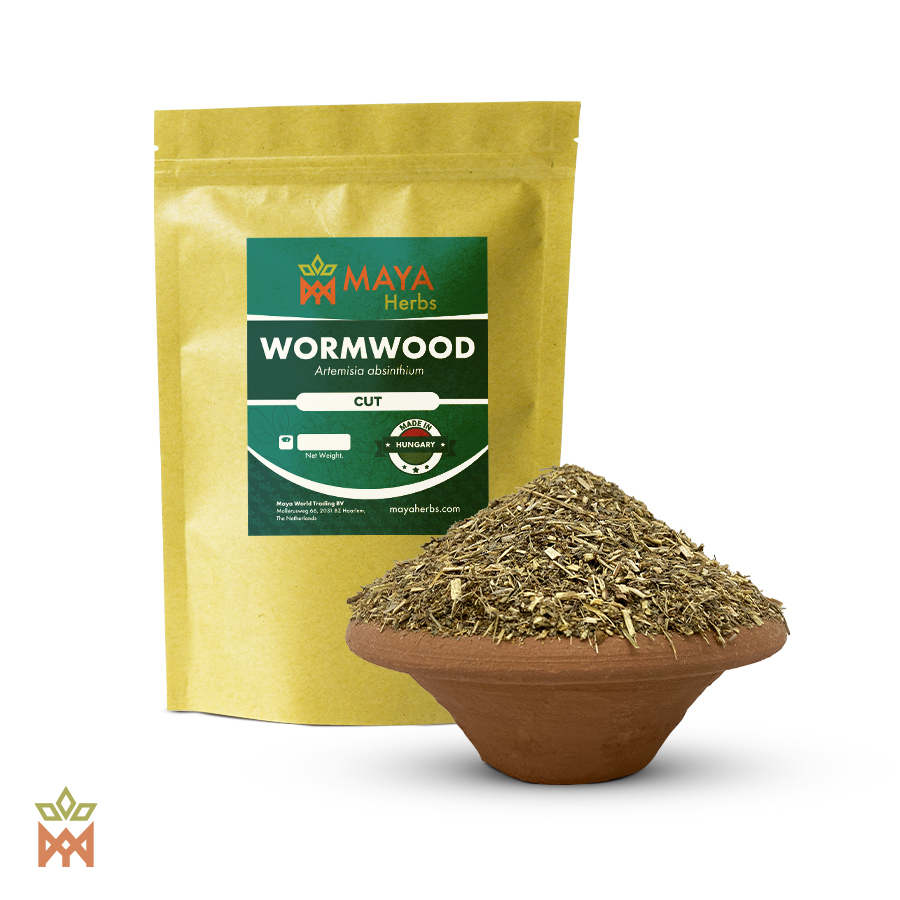
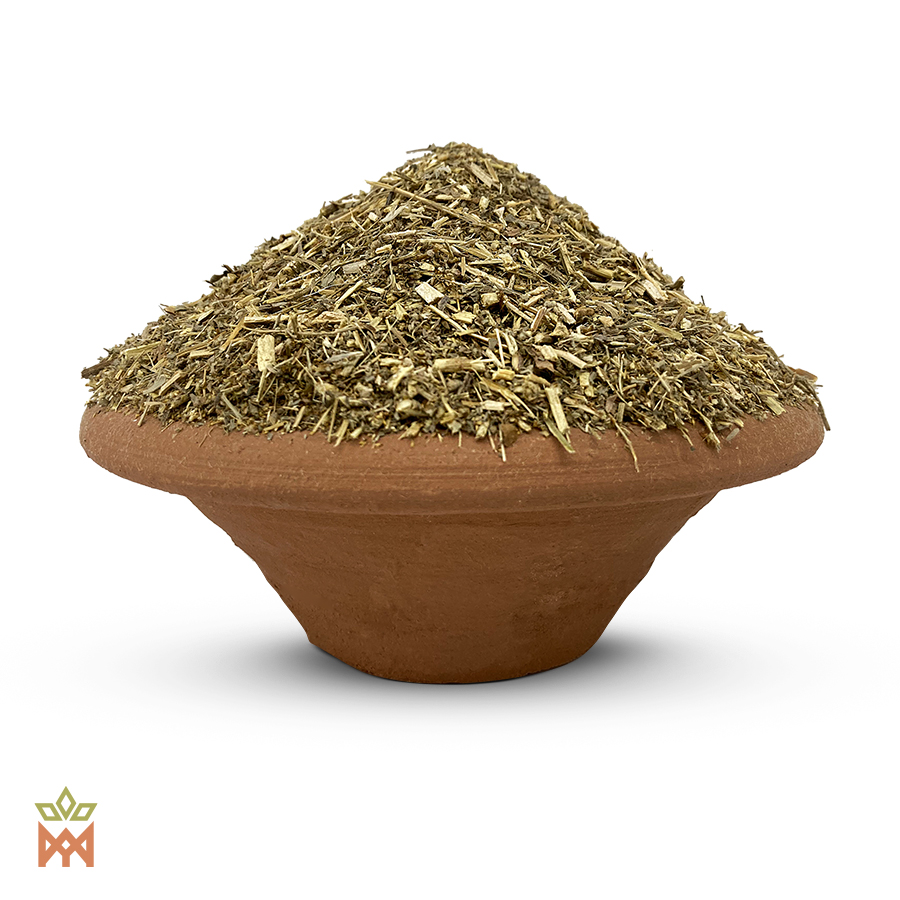
Wormwood is one of the characteristic bitter herbs of Europe. Its scent is strongly aromatic, while its taste has been familiar enough for centuries to become a literary image of bitterness. Maya’s Artemisia absinthium comes from Hungary and is supplied as carefully selected, hand-cut herb in a fine cut.

The plant is a perennial member of the daisy family, Asteraceae. Its native range extends across Europe and parts of Asia and North Africa, with Hungary within that range. It belongs to the large genus Artemisia, which also includes plants with quite different histories and chemical profiles.
A familiar bitter taste
European herbal traditions used Wormwood in preparations associated with appetite and digestion. That record explains the prominence of bitterness in its history: flavour and the purposes assigned to a herb were closely connected in household herbal knowledge.
Wormwood was familiar well beyond specialist herbals. In Romeo and Juliet, Shakespeare’s Nurse recalls using its bitterness when weaning Juliet. The passage is a historical glimpse of an everyday plant custom, not a practice recommended today. It shows how readily an audience could recognise the herb through its taste alone.
Absinthe and its reputation
Wormwood also gives absinthe its name and part of its botanical identity. The spirit’s reputation has often encouraged the idea that Wormwood produces a distinctive hallucinogenic experience. Modern analysis has challenged the chemical basis of that story.
In a study published in 2008, researchers analysed thirteen surviving bottles of pre-ban absinthe. The thujone concentrations were much lower than some earlier estimates and broadly comparable with those found in modern absinthes. The authors found no chemical basis for a special historical syndrome beyond the effects of alcohol. This concerns the tested drinks; it does not establish that concentrated Wormwood preparations are harmless.
Bitterness, aroma and research
Wormwood’s bitter substances and its volatile oil are different parts of its chemistry. Absinthin and related sesquiterpene lactones contribute to the bitterness. Thujone, when present, belongs to the volatile fraction, whose composition varies with the plant and growing conditions. Bitterness is therefore not a reliable measure of thujone content or potency.
The European Medicines Agency recognises a history of traditional use for particular Wormwood preparations in temporary loss of appetite and mild digestive complaints. Its assessment also makes clear that this status rests on longstanding use rather than sufficient clinical evidence to establish efficacy. It does not mean that every loose-herb product has been assessed as a medicine.
Wormwood is unsuitable during pregnancy or breastfeeding and for children. Avoid it with liver disease, blocked bile ducts or allergy to the daisy family; people with gallstones or other biliary disorders should seek medical advice. Concentrated essential oil should not be treated as interchangeable with dried herb.
Keep the cut herb dry and well sealed. Its bitter character and European history give it a distinct place among our Well-being botanicals.
Selected references
- Royal Botanic Gardens, Kew: Artemisia absinthium botanical record
- Folger Shakespeare Library: Romeo and Juliet, Act 1, Scene 3
- Lachenmeier and colleagues: chemical analysis of pre-ban absinthe (2008)
- European Medicines Agency: Wormwood herbal assessment and monograph
This product is sold as a botanical specimen. Information on traditional, cultural and reported uses is provided for educational and ethnobotanical purposes only and is not a recommendation for any particular use. This product is not intended to diagnose, treat, cure or prevent any disease.

Reviews
There are no reviews yet.