


The macaws and the cricket inside Cumaru Ferro
A Huni Kuin storyteller remembers what his grandfather used to say about Cumaru Ferro. Macaws raise their young in its hollows, and a frog makes its home there too. Deeper in the trunk lives a great cricket with a cry a child might be tempted to imitate. The grandfather had a word of advice about that. When the sound comes out of a Cumaru tree, let the cricket have the last word.
The account is preserved in Hi Xarabu miyui, a book in which Huni Kuin forest educators tell the histories of trees in their own language and in Portuguese. In this story the cricket is a spirit. A sound heard in passing by one person may mean something quite different to someone who grew up hearing the grandfather’s story.
Gathering Cumaru at the start of the dry season
The grandfather knew when to look for Cumaru fruit, just as the dry season was beginning. He knew what to listen for on the way and how the people who went looking ought to behave. Too much talking, he said, and the fruits would hide. The story carries a season, a grandparent’s voice and the proper courtesy to show a tree, all in a piece of advice about gathering nuts.
Why Huni Kuin makers choose Cumaru ash
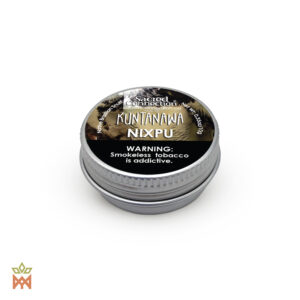
Cumaru Ferro is Dipteryx odorata. The Portuguese word ferro means iron, a fair description of a wood dense enough for the hard work of building houses and boats. Its seed is the aromatic tonka bean. For this strong, dry Huni Kuin hapé, the makers choose the tree’s ash to pair with tobacco.
In accounts of dume, the Huni Kuin tobacco preparation, Cumaru is valued for spiritual protection and for keeping knowledge safe. The grandfather’s story gives a little of the feeling behind those words. For someone who has listened to him, even a stretch of trunk that looks solid from the outside may be full of company.
This preparation contains tobacco and nicotine. Traditional and spiritual accounts are presented as cultural context, not as medical claims.


Reviews
There are no reviews yet.