

The distinctive fungus behind Lion’s Mane extract
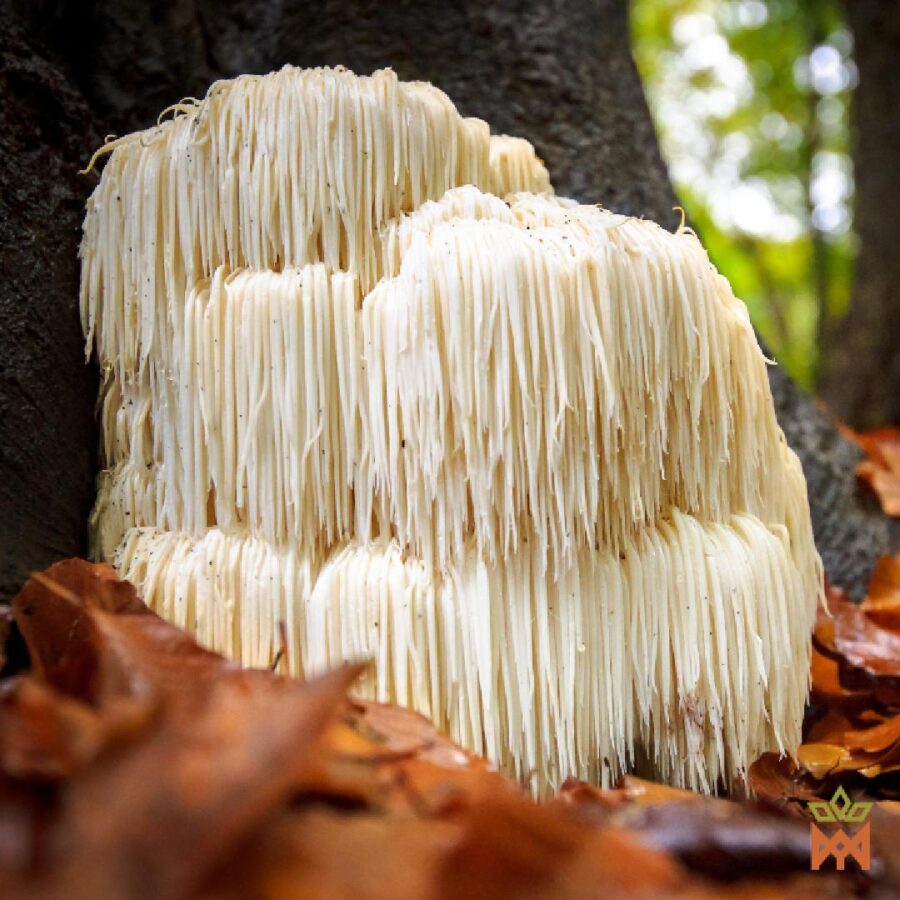
Lion’s Mane is recognisable by its hanging white spines, which form a soft, beard-like mass against the wood on which it grows. Known in Japan as Yamabushitake, Hericium erinaceus has a place in East Asian food and herbal traditions and has become one of the most closely discussed mushrooms in cognitive research.
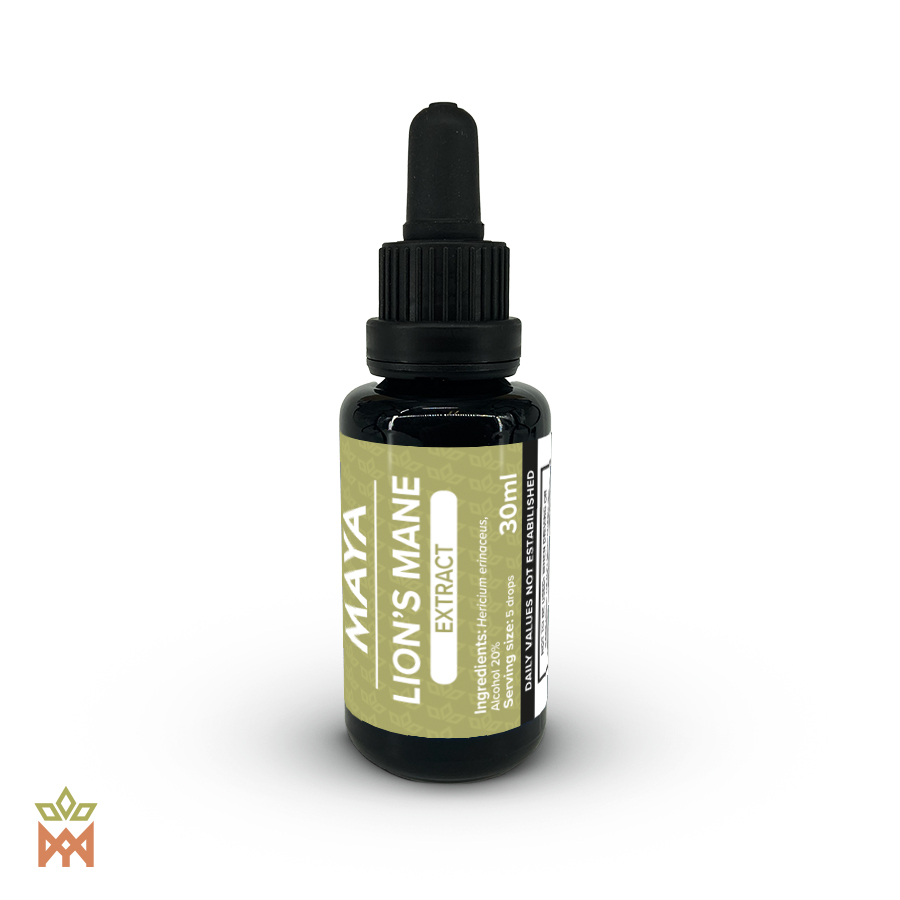
This Sage Extracts preparation uses ultrasound-assisted alcohol extraction to produce a broad mushroom extract in a low-alcohol liquid formula. The mushrooms are sustainably cultivated, and quality testing covers purity and potency. It brings a carefully prepared form of Lion’s Mane to the Maya mushroom collection, with the extraction method forming an important part of its identity.
Hericenones, erinacines and the mushroom itself
Two groups of compounds recur in Lion’s Mane research: hericenones and erinacines. They are different substances, associated with different fungal materials. Early work isolated hericenones from the mushroom, while several well-studied erinacines were isolated from cultured mycelium—the network of fungal filaments from which a mushroom develops.
Some of these isolated compounds influenced nerve growth factor, or NGF, in experimental systems. NGF is a protein involved in the development and maintenance of certain nerve cells. These discoveries opened a research field; they do not establish that every Lion’s Mane product contains the same compounds or produces the same response in people.
The starting material and analysis therefore matter as much as the species name. “Full-spectrum” describes the intention to retain a range of mushroom constituents, rather than manufacture a single isolated compound. It is not a measurement of hericenones, erinacines or beta-glucans.
Ultrasound-assisted alcohol extraction
During ultrasound-assisted extraction, sound waves create microscopic bubbles in the liquid. Their collapse produces local physical forces that help the solvent contact and penetrate the fungal material. This process, known as cavitation, can improve the release of compounds into the extraction liquid.
Alcohol is used as a solvent for constituents that water alone may recover less readily. The final profile depends on the starting material, solvent mixture, temperature and processing time. Ultrasound describes how extraction is assisted; it does not by itself demonstrate greater absorption in the human body or the preservation of every compound.
The low-alcohol finished formula is a separate characteristic from the alcohol used during extraction. Its serving instructions should be taken from the bottle, where the finished preparation is specified.
What human studies show
Lion’s Mane has been studied in small human trials, including research on cognition, mood and perceived stress. Results are mixed. A 2023 pilot study in 41 healthy adults found faster performance on one attention task after a single serving, alongside null and some negative findings on other measures. The longer-term stress result was a statistical trend, not a firm demonstration.
A separate study published in 2025 found no significant improvement in overall cognitive performance or mood, although one individual task improved. These studies used their own preparations and designs. They support further investigation, rather than a promise that this tincture improves memory, focus or neurological health.
Product guidance
Use the labelled serving and follow the bottle’s storage instructions. Food supplements complement a varied diet. Seek professional advice about suitability during pregnancy or breastfeeding, with medication or a medical condition, and avoid use if allergic to the ingredients.
Selected references
- Missouri Department of Conservation — Hericium erinaceus identification and ecology.
- Kawagishi et al. — original hericenone isolation and experimental NGF research (1991).
- Shizuoka University, Kawagishi laboratory — original erinacine studies from cultured mycelium.
- Docherty et al. — small placebo-controlled Lion’s Mane pilot study (2023).
- Surendran et al. — acute extract trial with mixed cognitive findings (2025).
Information on traditional use and scientific research is provided for education and is not a recommendation to diagnose, treat, cure or prevent disease.

Reviews
There are no reviews yet.