


Bark and resin in Amazonian plant traditions
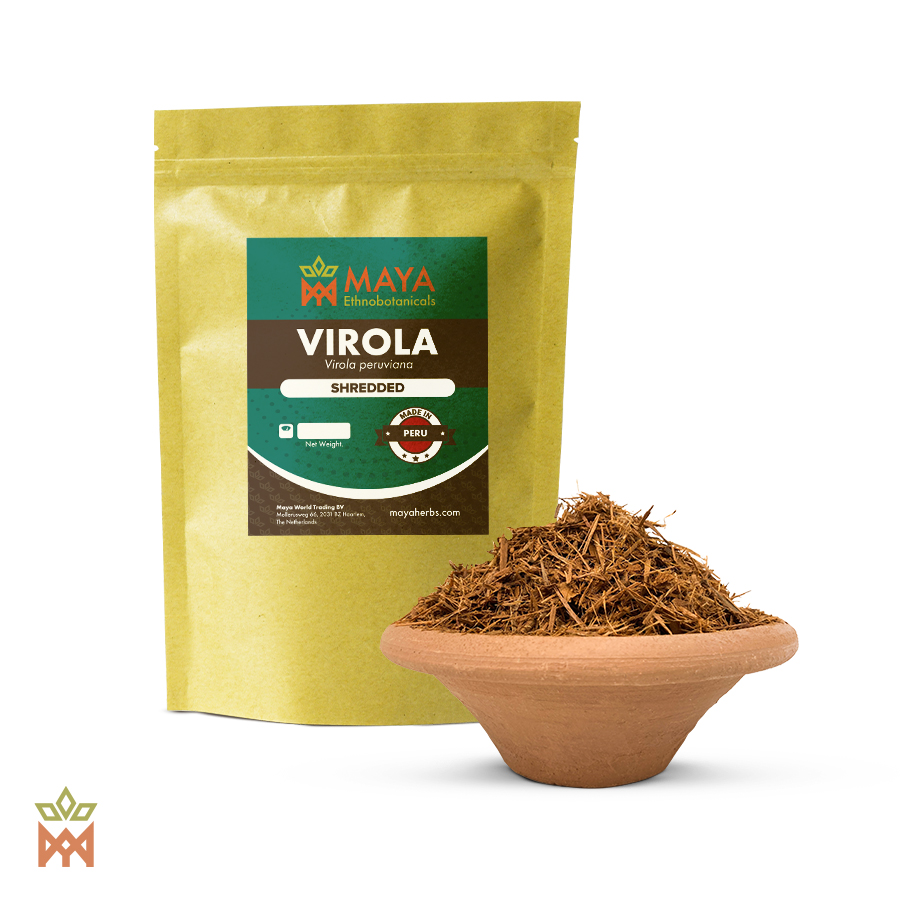
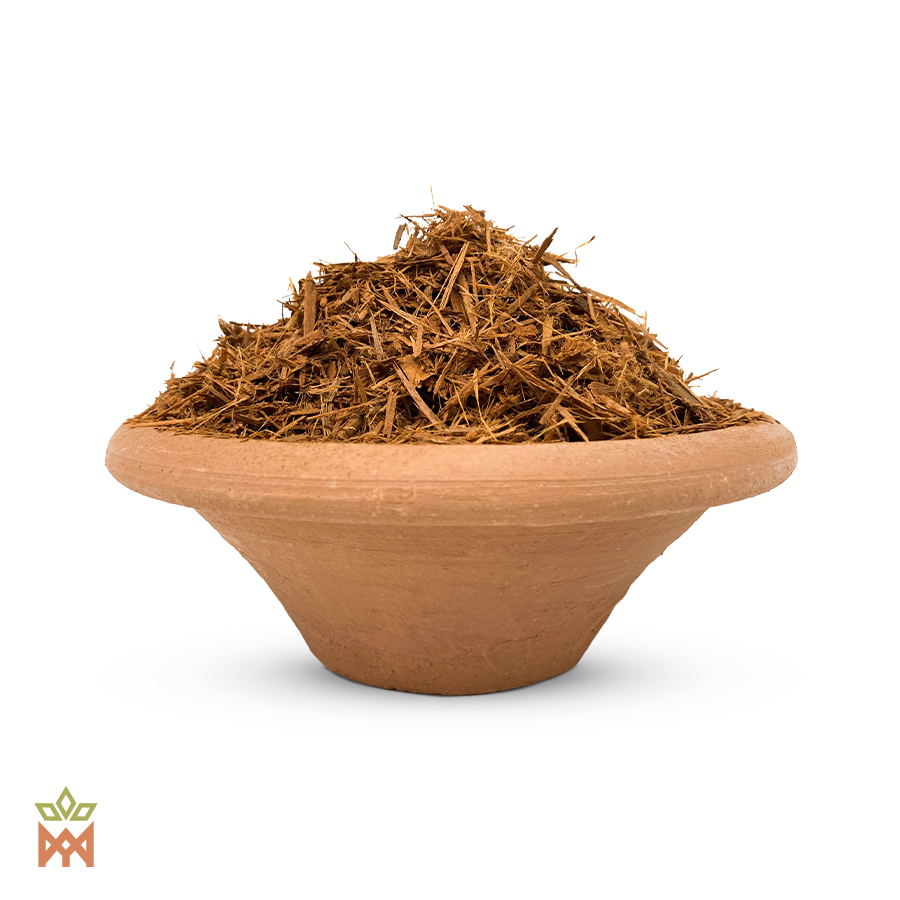
Among the rainforest trees known as cumala in Peru, Virola has attracted particular ethnobotanical interest for the resin-like sap associated with its bark. These trees belong to the nutmeg family, Myristicaceae, and their history brings together forest knowledge, everyday materials and ceremonial traditions. Our Virola peruviana bark is freshly shredded and sourced directly from Shipibo-Conibo suppliers in Peru.
A forest tree with several local identities
Virola peruviana is native to wet tropical forests from western South America into northern Brazil. Botanical records place it in Peru, Bolivia, Ecuador, Colombia and Brazil. Cumala is a regional name shared by several trees, so the botanical name matters when reading about their uses.
A specimen collected in Peru’s Madre de Dios region and held by the New York Botanical Garden records light outer bark, pink inner bark and yellow inflorescences. Its field notes include cumala colorada and the Shipibo-Conibo name manan-shoró, alongside names in the Ese Ejja language. The same record documents timber and dugout-canoe uses. These names and uses place the tree within daily forest life as well as the ethnobotanical record.
Shipibo provenance and distinct Amazonian traditions
The Shipibo-Konibo, also widely written Shipibo-Conibo, have longstanding ties to the Ucayali River and its tributaries. Their plant knowledge includes detailed distinctions between species and between the material and spiritual dimensions of plants. In ethnographic accounts, onanya means a person who knows: a specialist whose understanding is developed through learning and practice.
Fieldwork by Jacques Tournon and his colleagues describes local uses of cumala trees, while distinguishing them from the visionary preparations recorded among Bora and Witoto peoples. The researchers did not encounter that ceremonial use among their Shipibo-Konibo informants. The communities that supply a bark and the communities described in its wider ethnobotanical history can have different relationships with the tree.
Among Bora and Witoto communities near Pebas in the Peruvian Amazon, field researchers documented Virola preparations in religious and ritual life. The material of interest was the exudate associated with the bark, which can darken into a reddish-brown substance. This is the background to many accounts of Virola’s visionary significance. It concerns several species and specifically prepared materials, rather than a single practice shared across the Amazon. Shredded bark and the resin preparations described by ethnographers are distinct materials.
What research shows about the bark
V. peruviana has also been studied directly. In a chemical investigation published in the Journal of Pharmaceutical Sciences, researchers examined authenticated bark and identified naturally occurring alkaloids, alongside lignans and plant sterols. The study helped establish a chemical basis for the species’ ethnobotanical reputation. It was a study of plant composition, rather than a clinical demonstration of health benefits.
Later field and laboratory work examined identified Virola collections and traditional preparations from the Amazon. The researchers found substantial differences between collections, including samples of the same species. The composition of an identified research sample therefore cannot be assumed for every batch of bark.
Within our Yopo collection, Virola sits alongside the Anadenanthera seed specimens. The connection is ethnobotanical: Virola belongs to a different plant family and has its own history centred on bark and resin.
Selected references
- Royal Botanic Gardens, Kew — Virola peruviana: accepted name and native range.
- New York Botanical Garden — Field record for Virola peruviana, Alexiades 451.
- Peruvian Ministry of Culture — Shipibo-Konibo people.
- Tournon and colleagues (2014) — Ethnobotany of the Shipibo-Konibo.
- Lai and colleagues (1973) — Phytochemical investigation of Virola peruviana.
- Holmstedt and colleagues (1980) — Indole alkaloids in Amazonian Myristicaceae: field and laboratory research.
This product is sold as a botanical specimen. Information on traditional, cultural and reported uses is provided for educational and ethnobotanical purposes only and is not a recommendation for any particular use. This product is not intended to diagnose, treat, cure or prevent any disease.


Reviews
There are no reviews yet.