





The red vine of the Peruvian Amazon
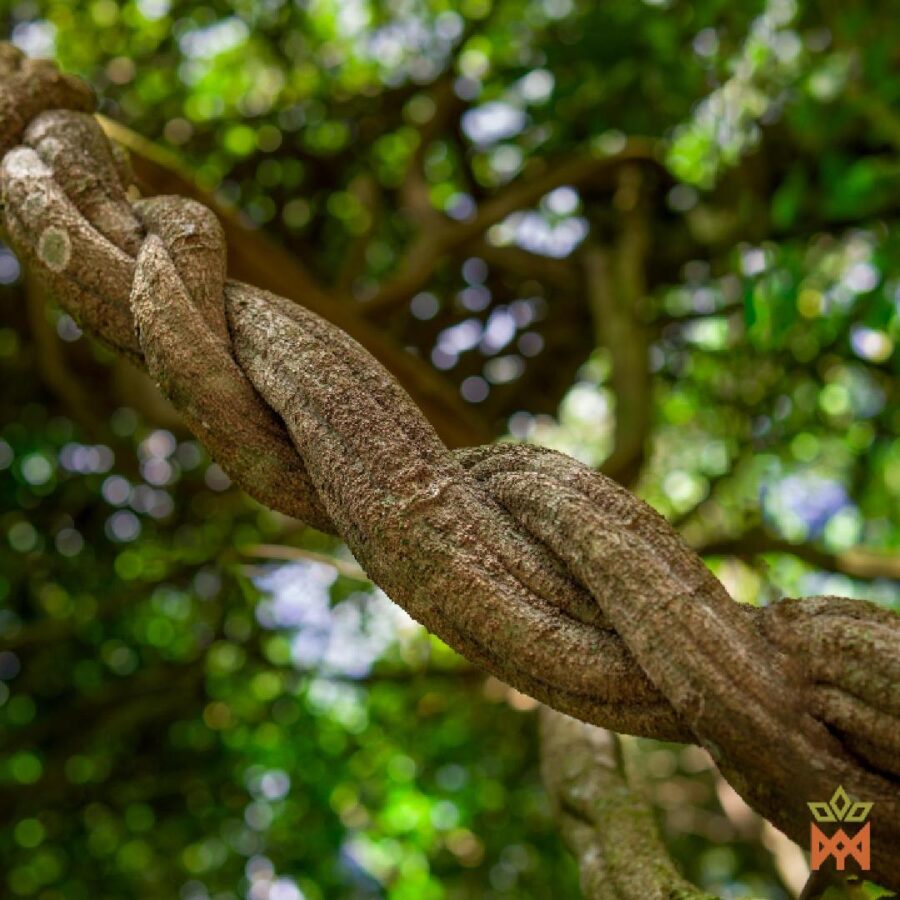
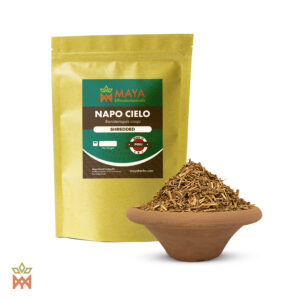
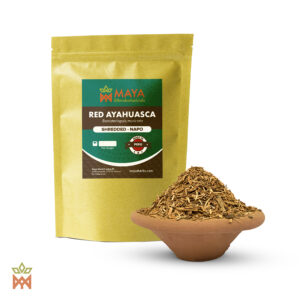
Red ayahuasca has its own place among the forest vines of Amazonian plant traditions. This material is Banisteriopsis muricata, harvested and prepared by Achuar producers in Peru and supplied as dried, shredded vine. Maya’s direct relationship with these producers brings a specific community provenance to a plant with a documented ethnobotanical history.
A closer look at Banisteriopsis muricata
B. muricata is a woody climber in the Malpighiaceae family and a separate species from B. caapi. Its range extends from Mexico into tropical South America. The living vine bears leaves with silky hairs on their undersides, sometimes giving the foliage a silvery or golden sheen. Pink flowers fade as they age, and the fruits develop prominent wings around a seed-bearing portion that can have a rough, pointed surface.
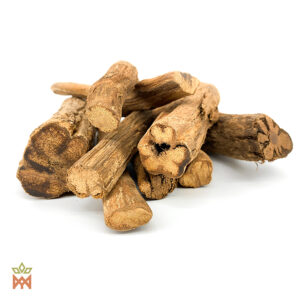
The stem has its own identifying features. A 2021 botanical study examined the wood, outer bark and leaves of muricata and two other ayahuasca-associated vines. Differences in their anatomy helped distinguish the species even without flowers or fruits. The dried material offered here is the woody vine, selected and prepared by the Achuar producers.
Recorded traditional uses
Ethnobotanists E. Wade Davis and James Yost documented muricata in eastern Ecuador during fieldwork in 1981. Among the Waorani, it was known as mii and associated with a ritual specialist’s communication with spirits believed to cause misfortune. Their report also records the same species in Peru under the name sacha ayahuasca, or wild ayahuasca.
These accounts place muricata within traditions of altered perception and communication with the spirit world. They document the red-vine species itself, alongside the much larger body of literature on B. caapi.
Achuar knowledge and provenance
The Achuar live in the Amazonian lowlands of Peru and Ecuador. In their natem traditions, specialist knowledge, song and relationships with spiritual allies are central to interpreting illness and misfortune. Anthropologist Anne-Christine Taylor describes healing sessions in which a practitioner draws on those relationships to address a person’s suffering and restore their capacity to act within the community.
The wider natem literature usually identifies B. caapi; Maya’s Achuar-sourced red vine is specifically B. muricata. Its provenance rests on the direct relationship with the people who harvest and prepare it, with sustainable harvesting retained as part of that sourcing commitment.
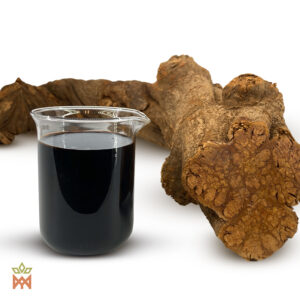
Our Red Napo vine offers muricata from a separate Peruvian source. The red liquid extract 12:1 is a concentrated preparation of fresh vine from Maya’s Achuar sourcing relationship.
Selected references
- Royal Botanic Gardens, Kew — Banisteriopsis muricata: accepted name and distribution
- New York Botanical Garden — Banisteriopsis muricata, botanical description
- Nagamine-Pinheiro and colleagues (2021) — Wood, bark and leaf anatomy of three ayahuasca-associated species; author abstract
- Davis & Yost (1983) — Novel hallucinogens from eastern Ecuador, original field report
- Anne-Christine Taylor (2014) — Healing translations: Moving between worlds in Achuar shamanism
- Bradley C. Bennett (1992) — Hallucinogenic plants of the Shuar and related Indigenous groups
This product is sold as a botanical specimen. Information on traditional, cultural and reported uses is provided for educational and ethnobotanical purposes only and is not a recommendation for any particular use. This product is not intended to diagnose, treat, cure or prevent any disease.
Reviews
There are no reviews yet.