
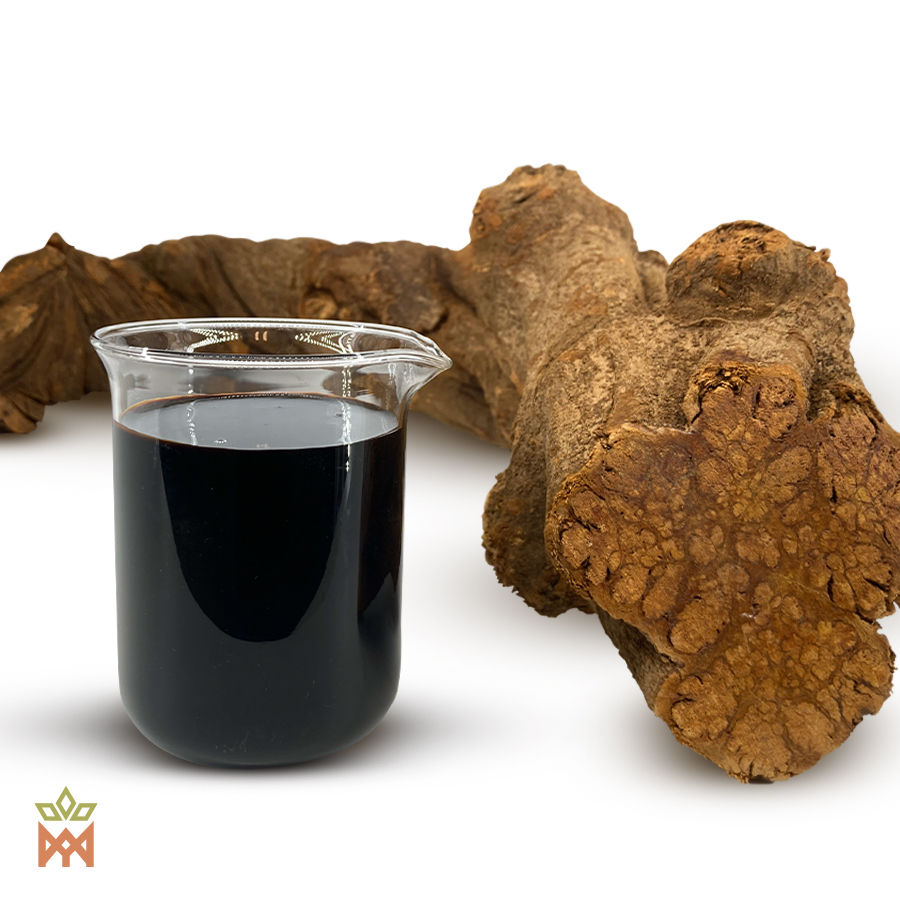
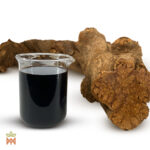

A concentrated preparation of Peruvian red vine
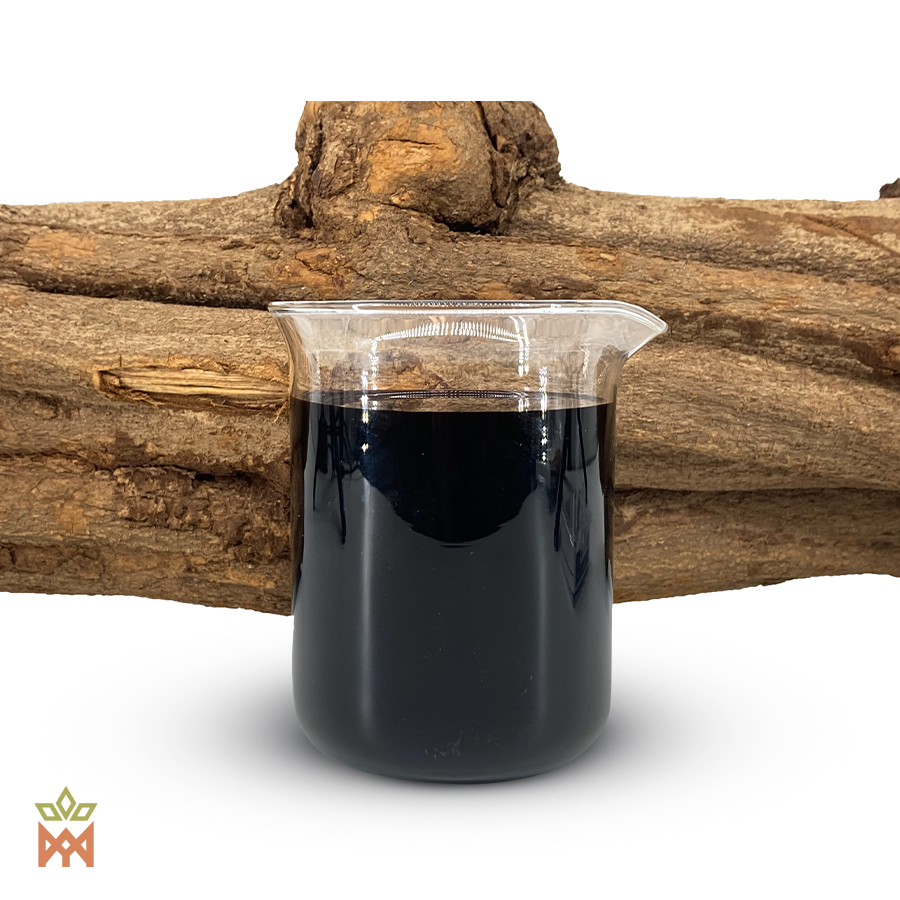
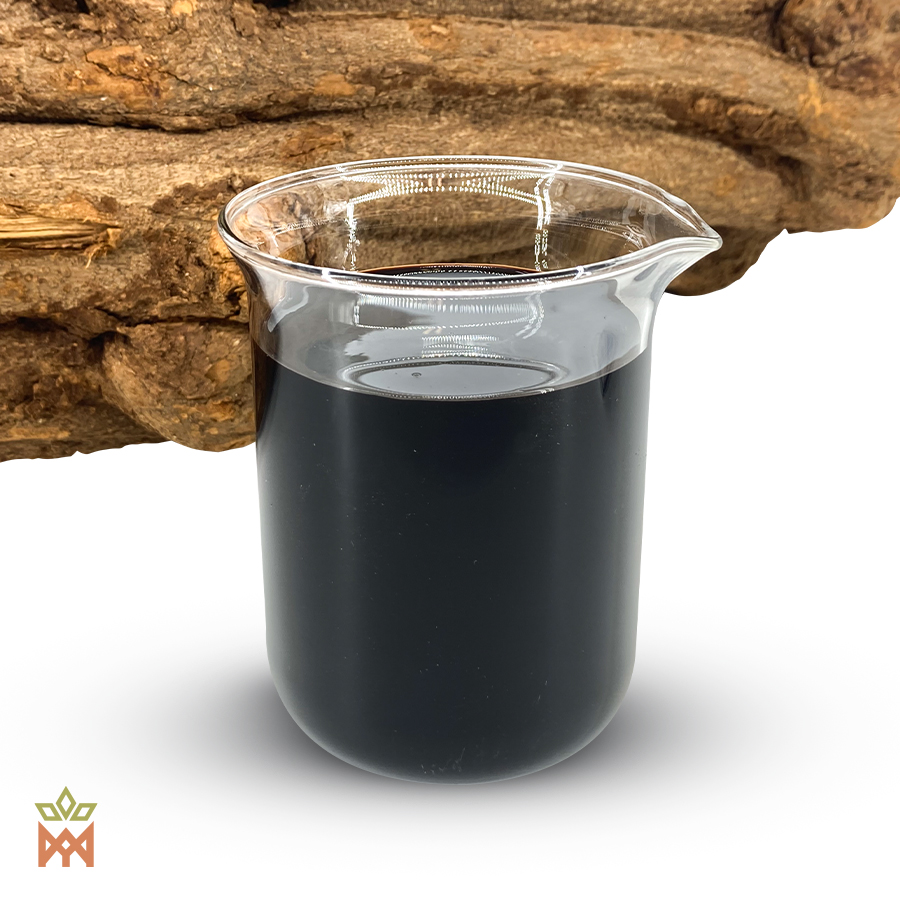
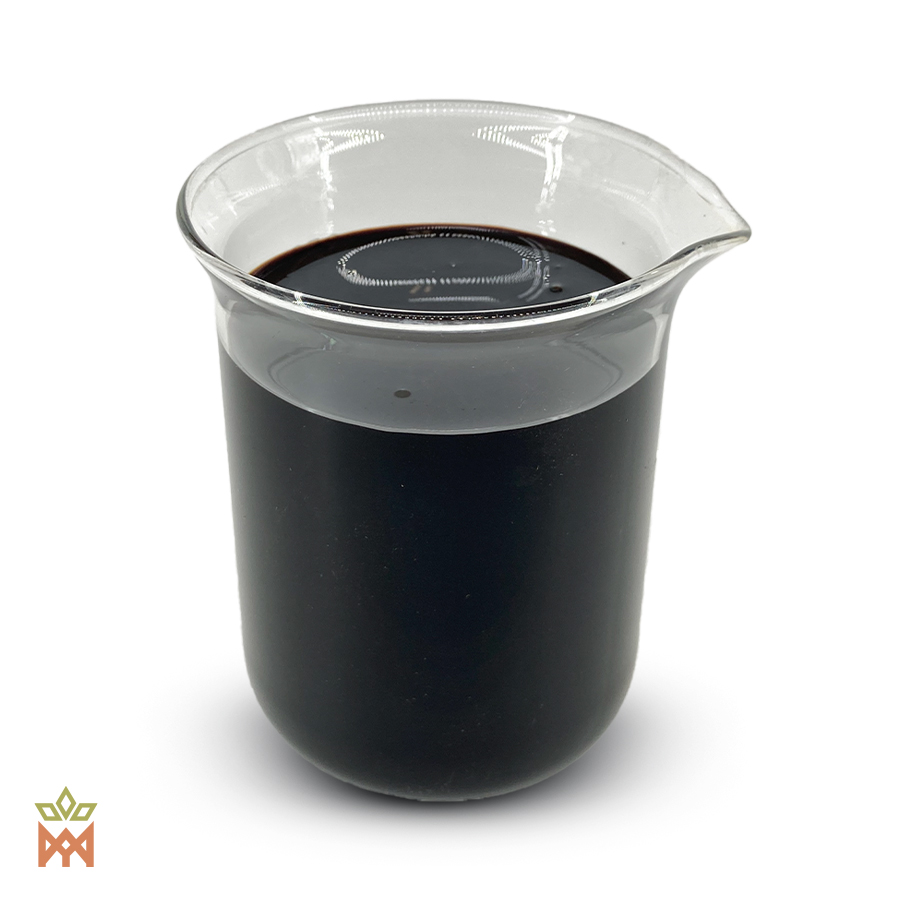
This liquid extract is made from fresh red ayahuasca vine supplied through Maya’s Achuar sourcing relationship in Peru. The product is identified as Banisteriopsis muricata, and its formulation contains the vine alone, with no added plants or additives.
The species is a woody climber in the Malpighiaceae family, related to B. caapi. In the living plant, silky leaf undersides and small winged fruits are among its botanical features. The common trade name “red caapi” does not make the two species interchangeable.
Twelve kilograms of fresh vine per litre
The 12:1 specification represents twelve kilograms of freshly harvested vine for every litre of finished liquid extract. It is a starting-material specification. Fresh-vine weight includes water and cannot be treated as an equivalent quantity of dried stem, or as a stated percentage of any alkaloid.
The Cielo caapi liquid extract 12:1 is made from a different species, B. caapi. The shared 12:1 figure describes the amount of fresh vine used in each preparation; it does not make the two extracts chemically equivalent.
Achuar provenance and traditional context
The vine is cultivated by Achuar producers and sourced through Maya’s established partnership, with responsible harvesting and limited, sometimes infrequent supply. The community connection is part of this extract’s provenance, alongside its Peruvian origin and single-vine formulation.
In ethnobotanical literature from the Ecuadorian and Peruvian Amazon, natem is associated with the ritual knowledge of the Shuar and related peoples, including the Achuar. Specialists have used ayahuasca traditions to investigate misfortune, seek visionary information and work within understandings of illness involving relationships with other beings. The botanical plant most commonly identified in that literature is B. caapi.
These accounts provide cultural background to the Achuar relationship with ayahuasca plants. The red vine in this extract is specifically B. muricata, and species-specific research is needed to understand its composition.
Research on the red vine
Chemical research on B. muricata remains limited. In a 2020 comparison of caapi and related vines, the single sample listed as muricata did not yield the three caapi β-carbolines being measured. The methods also describe a sample as B. cf. muricata, indicating uncertainty in its identification. This limited record leaves the composition of other muricata material, including this extract, unresolved.
The 12:1 figure therefore describes the fresh material used to make the extract, without assigning it the chemistry or effects of a caapi preparation. Concentrated ethnobotanical preparations should not be assumed safe to combine with medicines.
Selected references
- New York Botanical Garden — Banisteriopsis muricata, botanical description
- Bradley C. Bennett (1992) — Hallucinogenic plants of the Shuar and related Indigenous groups
- Santos and colleagues (2020) — Biodiversity of β-carboline profiles in Banisteriopsis caapi and related plants
This product is sold as a botanical specimen. Information on traditional, cultural and reported uses is provided for educational and ethnobotanical purposes only and is not a recommendation for any particular use. This product is not intended to diagnose, treat, cure or prevent any disease.
Todd Youngs (verified owner) –
This Peruvian Red Vine extract is outstanding. It is very powerful with a quick onset of action as well as a long duration. I highly recommend it.
Jean Mathis (verified owner) –
This is vine extract is truly extraordinaire. I have purchased it for over ten times and always with stellar results. Don’t go over 10 ml per shot.Very powerful stuff.