


Harmal seed powder and its botanical heritage
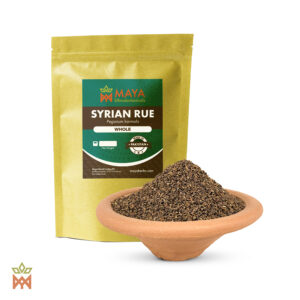
Syrian rue has a place in both the material and spiritual traditions of western and southern Asia. Its seeds have supplied textile colours, figured in protective household customs and drawn scientific interest for their harmala alkaloids. This powdered Peganum harmala comes from Pakistan, where the plant is known as harmal. It consists of ground seeds, with the seed tissues retained in the powder.
Peganum harmala is a perennial in the Nitrariaceae family, with deeply divided leaves, pale flowers and rounded seed capsules. It grows across dry regions extending from the Mediterranean to Mongolia and India. The seeds are small and dark brown; botanical studies describe the ground material as brown, with fragments of the firm seed coat and oil-containing tissues visible under the microscope.
Harmaline and harmine
Harmaline and harmine are the best-known beta-carboline alkaloids in Syrian rue seeds. Both act as reversible MAO-A inhibitors. Monoamine oxidase A is an enzyme that helps break down several signalling molecules, including serotonin. In laboratory studies, these two alkaloids accounted for most of the MAO-A inhibition measured in seed extracts.
The powder is ground botanical material, rather than an extract standardised to an alkaloid concentration. Research on isolated compounds and laboratory extracts describes the plant’s chemistry; it does not establish a therapeutic effect for this product.
Plant pigments and Persian tradition
Harmal’s role as a natural dye connects its chemistry with textile craft. A 2022 study examined colourants from powdered seeds on wool, recording yellow to reddish-yellow shades. Colour depth and tone varied with the treatment of the fibre and the substances used to bind the colour. The same seed can therefore give different colours on the finished cloth.
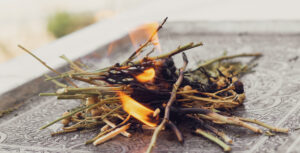
In Persian tradition, the seeds are known as esfand. Their use in protective fumigation is recorded in early literature and remains associated with warding off the evil eye. The custom gives this modest plant a place in domestic ritual as well as in the history of natural colourants.
Ingestion can cause serious poisoning. Its MAO-inhibiting alkaloids can also interact dangerously with medicines. This material is offered as a botanical specimen.
Whole Syrian rue seeds from Pakistan are also available in our Syrian Rue collection.
Selected references
- Royal Botanic Gardens, Kew: Peganum harmala; botanical identification and seed microscopy (2013).
- Herraiz et al. (2010): beta-carboline alkaloids and human MAO inhibition.
- Adeel et al. (2022): colourants from harmal seed powder on wool.
- Encyclopaedia Iranica: Esfand.
- Achour et al. (2012): clinical reports of Peganum harmala poisoning.
This product is sold as a botanical specimen. Information on traditional, cultural and reported uses is provided for educational and ethnobotanical purposes only and is not a recommendation for any particular use. This product is not intended to diagnose, treat, cure or prevent any disease.
Reviews
There are no reviews yet.