

An aromatic tree of the eastern woodlands
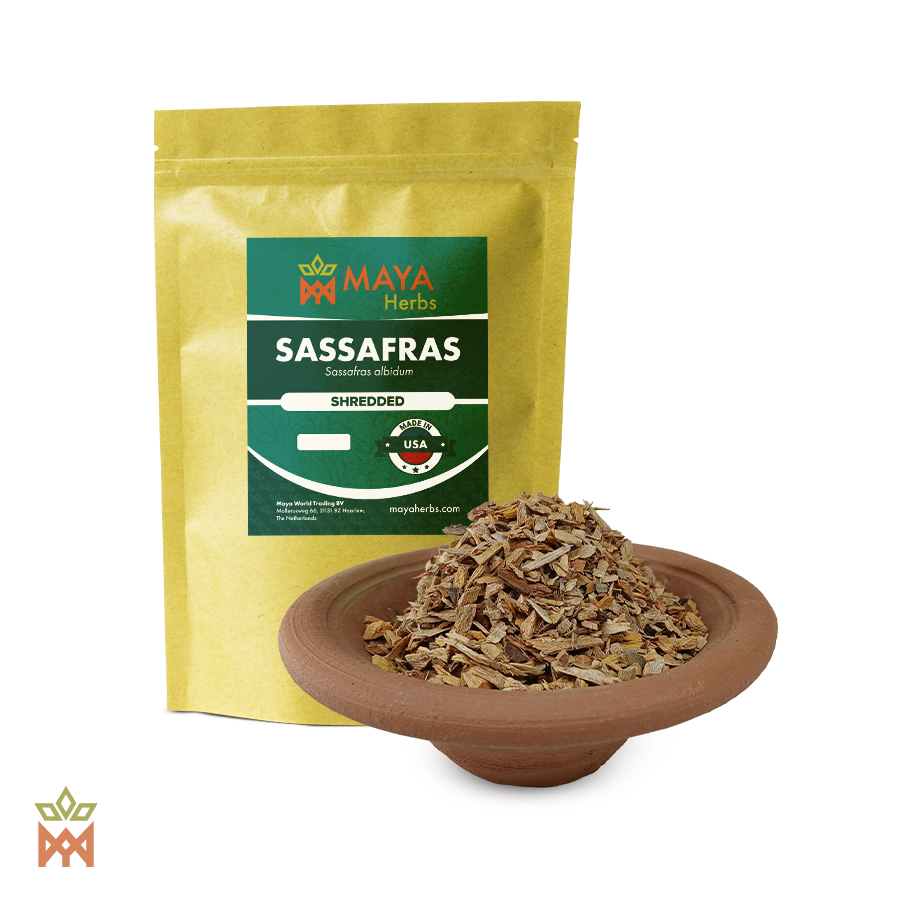
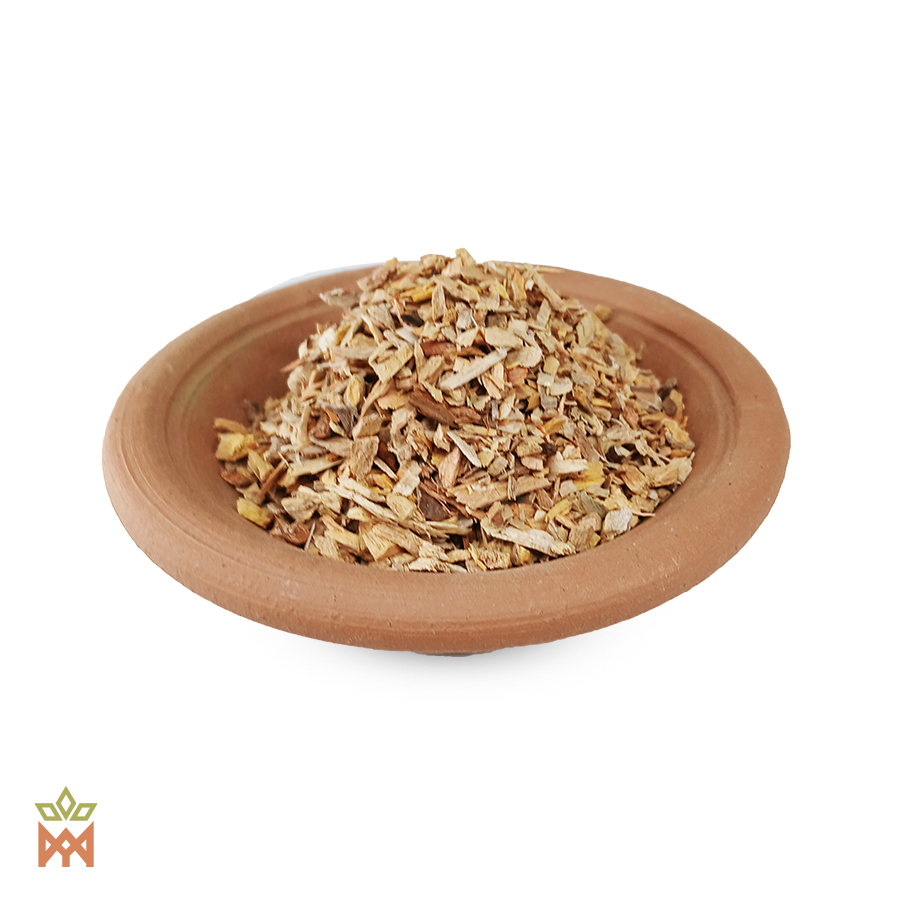
Sassafras is one of the distinctive aromatic trees of eastern North America. Its bark, twigs and leaves carry a spicy fragrance, while a single branch can bear three different leaf shapes: an oval, a mitten and a three-lobed leaf. This shredded Sassafras albidum bark comes from the United States. Our suppliers collect mature bark from naturally fallen branches, then air-dry, hand-clean and inspect the material for purity.
The tree belongs to the laurel family, Lauraceae. It often appears along woodland edges and in places where forest is regenerating. Its green summer foliage can turn yellow, orange or red in autumn, adding another recognisable feature to a tree that has long attracted attention for its scent.
Indigenous knowledge and Atlantic trade
The United States Department of Agriculture records many uses of sassafras among Native American peoples, including the Cherokee, Choctaw and Houma. Different parts served different purposes: leaves as seasoning, roots in traditional infusions, and wood in practical work. Historical accounts also describe medicinal and ceremonial uses. These records show the plant’s importance within particular communities, rather than establishing modern claims about detoxification or cleansing.
European interest made sassafras an early Atlantic trading commodity. A National Park Service account describes an English voyage returning to Bristol in 1603 with a cargo of sassafras, before the establishment of Jamestown. The tree later appeared among the resources the Virginia Company hoped would make its colony profitable. Its history therefore reaches beyond household herbalism into the commercial ambitions of the early colonial period.
Two familiar culinary associations concern different plant parts. Sassafras root bark once supplied the characteristic flavour of root beer, while dried, powdered leaves are used as filé in Louisiana cooking. Neither is the same material as the shredded branch bark offered here.
Safrole and the limits of traditional use
The modern scientific discussion of sassafras is inseparable from safrole, a naturally occurring constituent. Experimental studies found that safrole caused liver tumours in laboratory animals. The United States National Toxicology Program consequently lists it as reasonably anticipated to be a human carcinogen.
United States food regulations prohibit added safrole and sassafras oil, including the use of sassafras bark to impart these substances to tea. Raw bark should not be confused with specially processed, safrole-free flavourings. The material offered here is not represented as safrole-free and is not recommended for tea or internal use.
Sassafras remains a compelling botanical through its fragrance, unusual leaves and place in North American history. This branch bark belongs in that botanical and ethnobotanical context, with the distinction between historical practice and present-day safety kept clear. Explore the Well-being collection for other plants and their individual histories.
Selected references
- North Carolina State University Extension: Sassafras botany and plant-part distinctions
- USDA plant guide: Sassafras and recorded Indigenous uses
- National Park Service: Early voyages and the 1603 sassafras cargo
- National Park Service: John Rolfe and the Virginia Company’s early enterprises
- National Toxicology Program: Safrole, Report on Carcinogens
- US federal food regulation: Safrole, 21 CFR 189.180
This product is sold as a botanical specimen. Information on traditional, cultural and reported uses is provided for educational and ethnobotanical purposes only and is not a recommendation for any particular use. This product is not intended to diagnose, treat, cure or prevent any disease.

Reviews
There are no reviews yet.