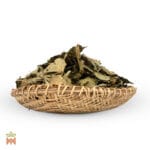

The leaves of the Cielo vine
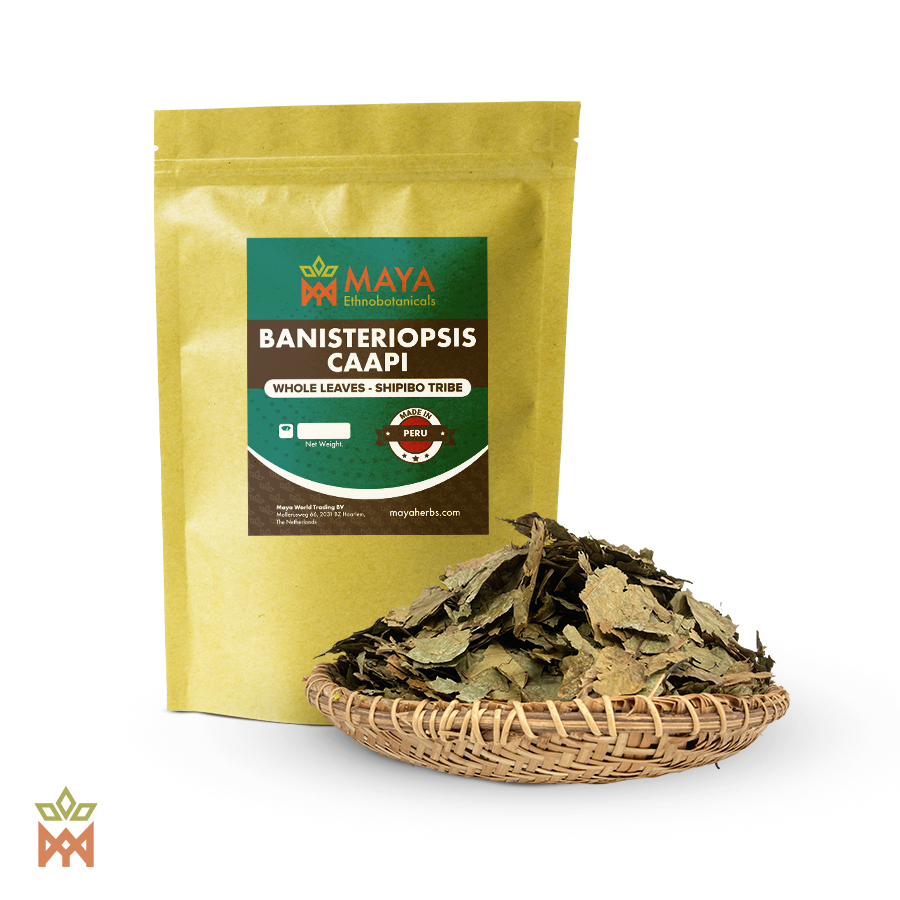
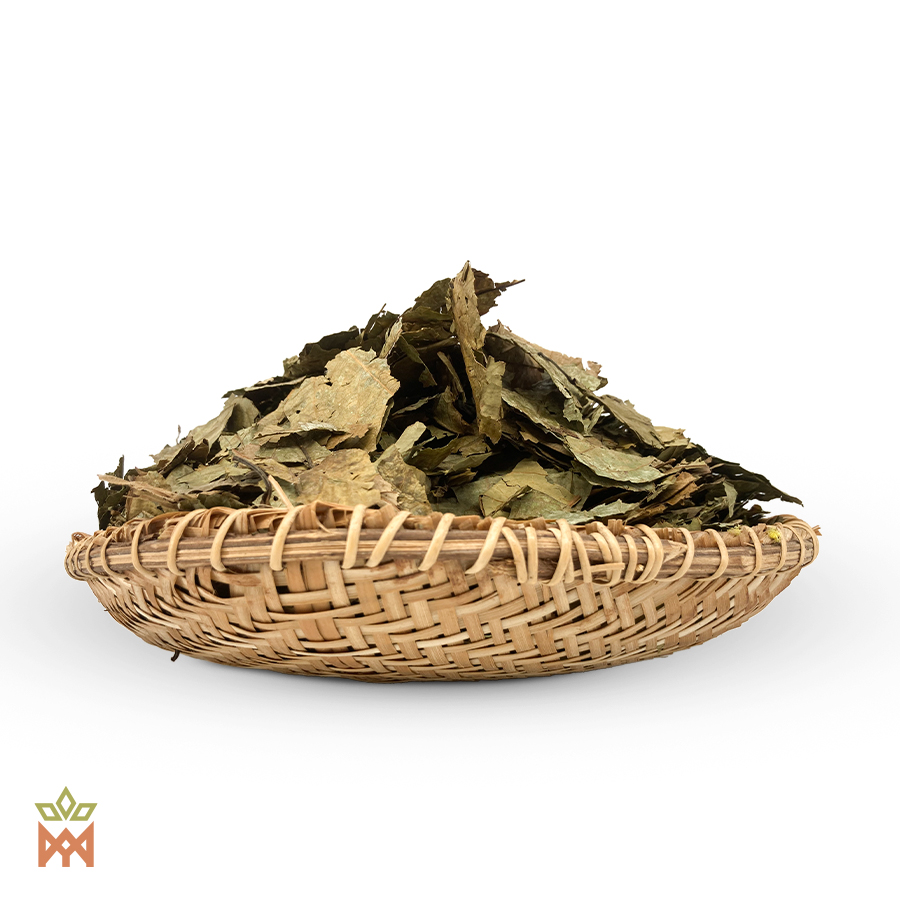
Most descriptions of caapi begin with its woody stem. The whole leaves reveal another side of the plant: the broad blades and branching veins that support a climbing vine high in the forest. These Cielo Banisteriopsis caapi leaves are harvested by Shipibo producers in Peru and sourced through Maya’s sustainable community partnership.
These are the leaves of the caapi vine itself. Several different plants appear in ayahuasca traditions, so the botanical name is useful when choosing material described as “ayahuasca leaves”. Our Shipibo Cielo vine offers the woody stem of the same named type.
Reading the living plant
B. caapi belongs to the Malpighiaceae family. Its leaves grow opposite one another on the stem, with an unbroken margin and a pointed tip. Leaf shape varies from oval to broadly egg-shaped. Small glands can occur on the leaf stalk or blade, features that botanists examine alongside flowers and fruits when identifying the plant.
Keeping the leaf whole preserves more of that visible structure than powdering it. Natural differences in size and outline are part of the material and do not by themselves indicate different species or grades.
Leaves, stems and plant chemistry
Wang and colleagues compared aqueous extracts of caapi leaves, young stems, mature stems and bark. Their laboratory study measured β-carboline alkaloids and other constituents, finding substantial differences between plant parts. In the material they examined, leaf β-carboline levels were lower than those of several stem and bark samples.
The research gives the leaves a chemical identity of their own within the plant. It was conducted on other source material and does not establish the composition, effects or safety of this particular Shipibo leaf product.
Leaf knowledge and local classifications
A 2026 study used images of dried leaves to investigate traditional caapi classifications. Its computer models recognised some named groups more readily than others, with overlap between several types. Leaf shape and texture can therefore carry useful information, while remaining only part of a plant’s identification.
For growers and practitioners, recognising a plant also involves cultivation, observation and knowledge shared through practice. These leaves come from the Cielo type supplied by our Shipibo producers, linking their visible botanical features with a named vine and a specific community source.
Maya sources the leaves directly from Shipibo producers through a sustainable harvesting partnership. Keeping them whole preserves their outline and venation, offering a close view of the foliage of this culturally important Amazonian climber.
Selected references
- World Flora Online — Banisteriopsis caapi, botanical description
- Wang and colleagues (2010) — Composition, standardization and chemical profiling of Banisteriopsis caapi
- Biazatti and colleagues (2026) — Leaf morphology and traditional classifications of Banisteriopsis caapi
This product is sold as a botanical specimen. Information on traditional, cultural and reported uses is provided for educational and ethnobotanical purposes only and is not a recommendation for any particular use. This product is not intended to diagnose, treat, cure or prevent any disease.
Reviews
There are no reviews yet.