


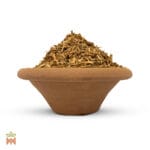

Cielo vine from the Peruvian Napo
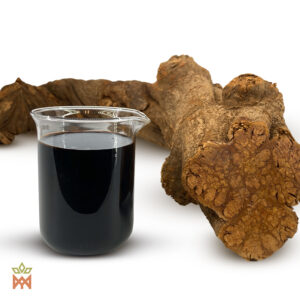
The Napo runs from Ecuador into Peru, linking Andean foothills with the lowland Amazon. Along this river system, plants have long travelled with people, cultivation and exchanged knowledge. Our Napo Cielo is Banisteriopsis caapi from the Peruvian part of that landscape, offered as finely shredded vine.
The plant is a woody forest climber whose stems can become deeply grooved with age. Its leaves grow in pairs, and the vine winds around surrounding vegetation as it reaches towards the canopy. Cielo is the supplied type’s name; Napo describes the regional source.
The character of Cielo
Cielo, Spanish for sky or heaven, is a traditional variety of B. caapi. In the Shipibo practice described by Caya Shobo, Cielo is associated with gentler, lighter visionary qualities than its Amarillo vine. This is one practitioner tradition’s account of Cielo’s character; the Napo material here has its own regional source.
Such distinctions are maintained through the selection and cultivation of particular vines. Growers recognise plants through their appearance, growth and qualities learned in practice. Cielo’s reputation belongs to this accumulated knowledge of the living plant.
The Napo in early accounts
Richard Spruce recorded caapi cultivation across the Napo and Pastaza river systems. In 1857, near Canelos and Puca-yacu in present-day Ecuador, he recognised a vine he had already encountered farther east, now called ayahuasca. His accounts describe specialists seeking information about illness, disputes and approaching events.
Knowledge rooted in place
Anthropologist Michael Uzendoski’s work with Napo Runa communities in Ecuador describes a landscape of relationships: rivers, plants and animals can be understood as beings with whom people communicate. Songs and stories connect knowledge to places, family histories and encounters. Within this view, knowing a plant involves more than identifying a useful substance inside it.
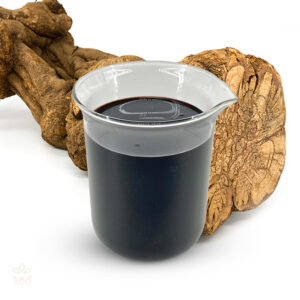
Maya’s Napo Cielo is sustainably harvested through sourcing that supports local communities and fair trade practices. It is supplied finely shredded; the Napo Cielo liquid extract is a separate concentrated preparation from the same region.
Selected references
- New York Botanical Garden — Banisteriopsis caapi, Flora Neotropica description
- Richard Spruce — Notes of a Botanist on the Amazon & Andes (1908), original field accounts
- Michael A. Uzendoski (2012) — Beyond orality: Napo Runa knowledge, territory and relationships
- Caya Shobo — Ayahuasca varieties in the centre’s Shipibo practice
This product is sold as a botanical specimen. Information on traditional, cultural and reported uses is provided for educational and ethnobotanical purposes only and is not a recommendation for any particular use. This product is not intended to diagnose, treat, cure or prevent any disease.
Reviews
There are no reviews yet.