
Raspberry Jam Wattle of Western Australia
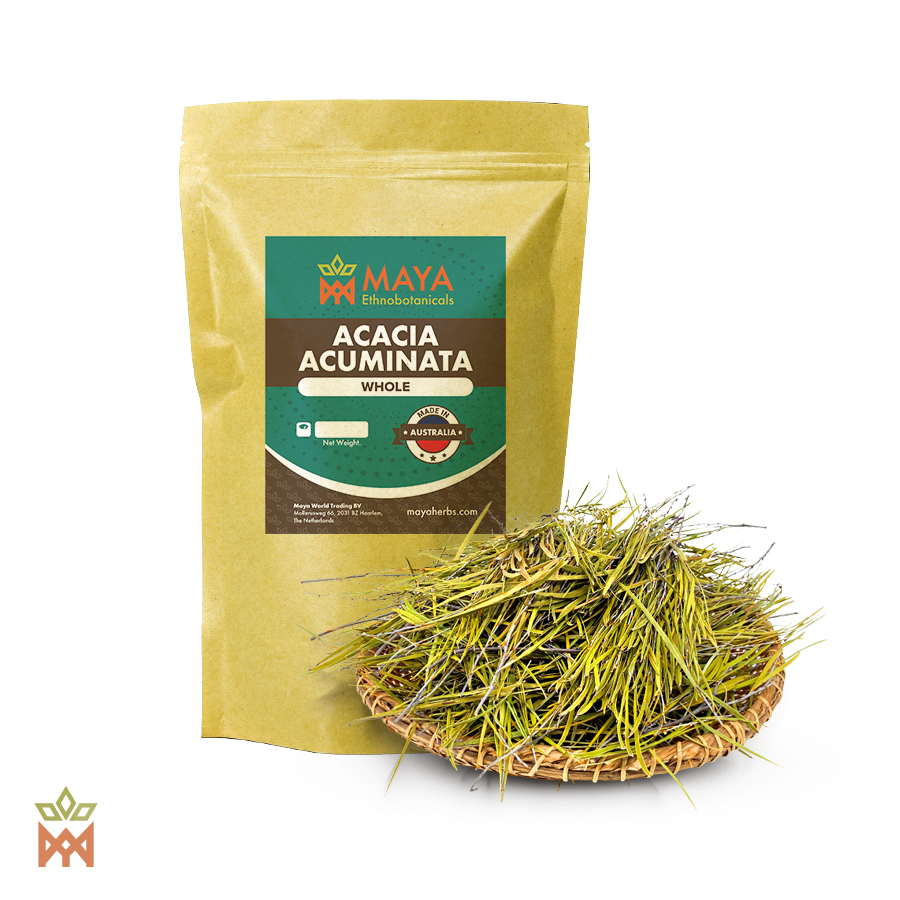
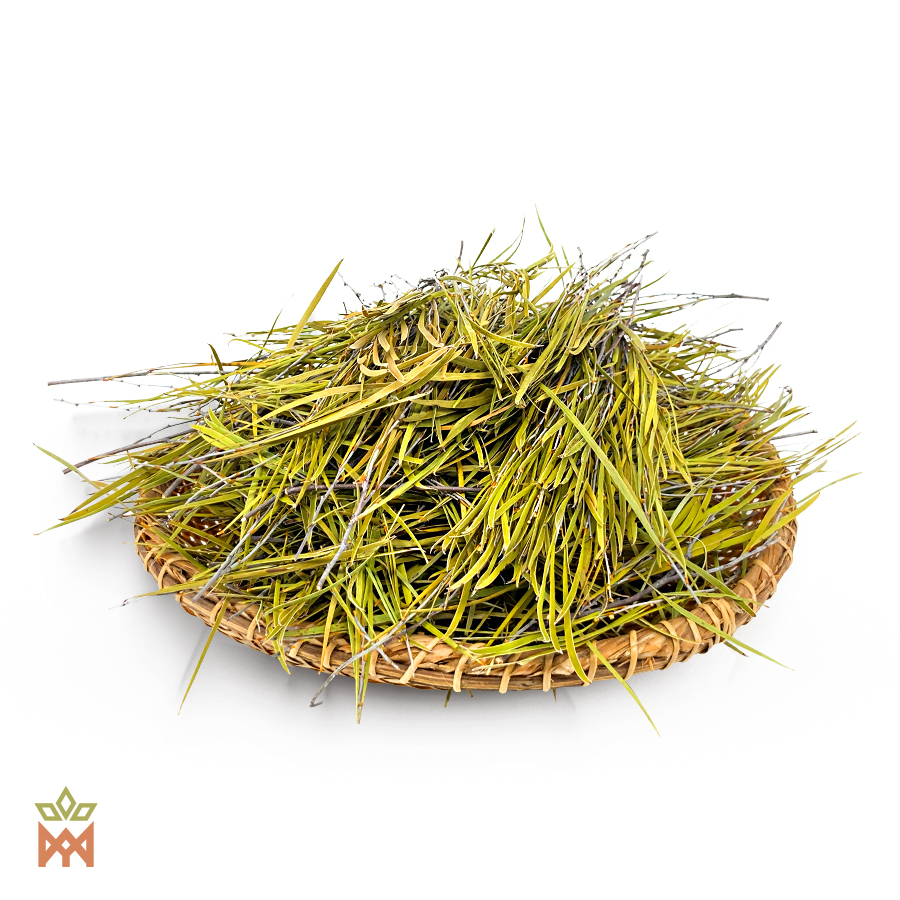
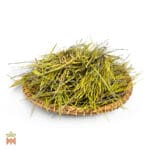
Acacia acuminata, commonly known as Raspberry Jam Wattle, is a shrub or small tree native to southwestern Australia. Its slender green foliage, golden flower spikes and aromatic timber make it a distinctive part of Western Australia’s woodland landscapes. Maya Herbs offers whole narrow phyllodes from Australia, the leaf-like foliage of this ethnobotanically interesting wattle.
The unusual common name comes from its freshly cut heartwood, which releases a fragrance traditionally compared with raspberry jam—a memorable characteristic recorded by early timber cutters.
Slender foliage and golden flowers
Typically growing around 3–7 metres tall, and occasionally reaching approximately 10 metres, Acacia acuminata occurs in semi-arid woodlands and tall shrublands. It grows across varied soils, including lateritic gravel, sandy ground and red-brown earth.
Its mature foliage consists of phyllodes: flattened leaf stalks that carry out photosynthesis. The narrow-phyllode form is recognised for particularly slender foliage, with fine parallel veins and tips tapering into delicate, slightly curved points. During the flowering season, densely packed yellow flowers form short cylindrical spikes, followed by narrow seed pods.
A place in Noongar plant knowledge
Recorded Noongar names for the tree include Manjart and Mungart. Its ethnobotanical history encompasses food, medicine and the making of everyday implements.
The Western Australian Museum documents seeds roasted and ground into flour, alongside gum valued as a sweet food and used in traditional preparations for coughs and chest complaints. Noongar educational resources also record flower infusions used externally for blisters and burns. The tree’s hard timber supplied digging sticks, throwing clubs and spear-throwers. These specific uses illustrate the breadth of knowledge associated with different parts of the tree.
Contemporary ethnobotanical interest
Acacia acuminata also attracts contemporary interest for its naturally occurring tryptamine alkaloids. Scientific research has investigated constituents obtained from its phyllodes and young stems, placing the species within modern studies of plant chemistry and consciousness. This research concerns specially prepared formulations rather than the whole botanical material offered here.
Discover this Australian botanical within Maya Herbs’ Acacia collection.
Selected references
- Botanical identity and description: Royal Botanic Gardens, Kew; WATTLE / Flora of Australia.
- Wood fragrance and regional botany: Western Australian Department of Biodiversity, Conservation and Attractions: Jam profile.
- Traditional plant knowledge: Western Australian Museum; Sharing Noongar Knowledge.
- Contemporary research: Bonomo et al. (2025), Frontiers in Psychiatry.
This product is sold as a botanical specimen. Information provided here is for educational and ethnobotanical purposes only. It is not intended to diagnose any ailment, or to treat, cure, or prevent any disease. Please check your local regulations before ordering botanical products.

Reviews
There are no reviews yet.