

Acacia xanthophloea bark for dream work and plant tradition
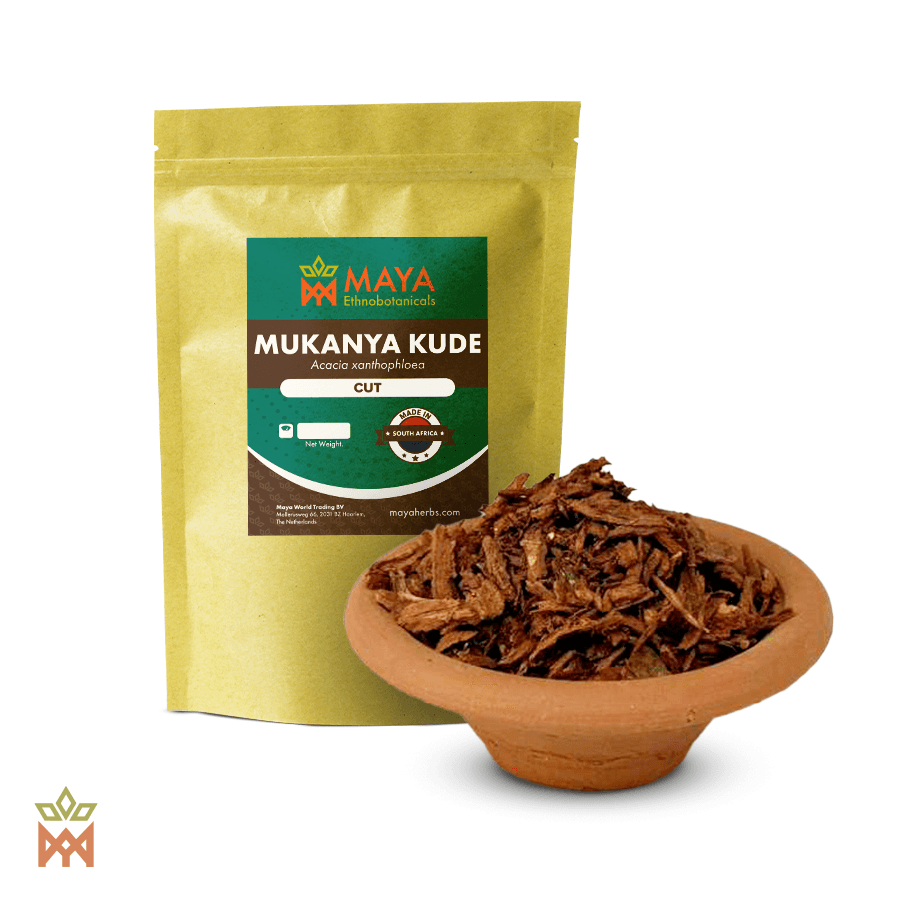
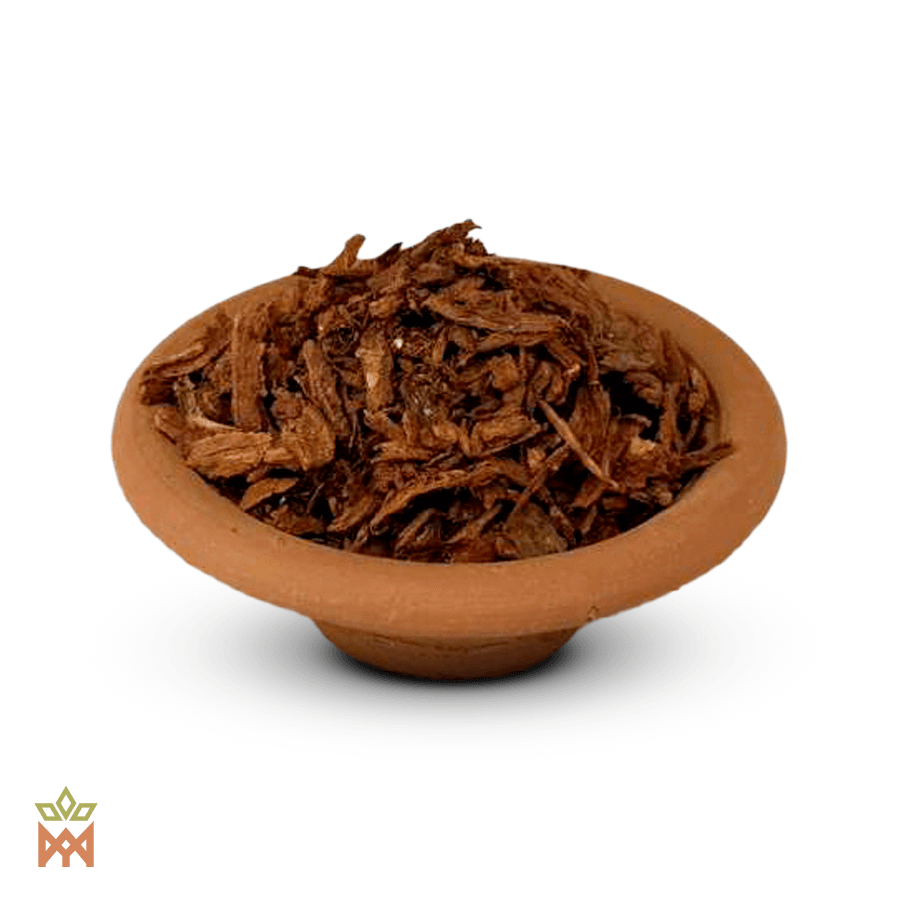
Acacia xanthophloea, now more commonly classified as Vachellia xanthophloea, is the African yellow fever tree. Mukanya Kude is the shredded bark of this striking tree, known for its pale yellow-green trunk and its place in southern African plant knowledge.
At Maya Herbs, we offer Mukanya Kude as a traditional bark for people who work respectfully with dream herbs. It is often sought by customers interested in lucid dreaming, dream recall, and the quiet inner focus that can come with evening plant rituals.
In ethnobotanical writing, the acacia xanthophloea fever tree is described as a plant with traditional and present-day uses in African herbal knowledge. A recent review on Vachellia xanthophloea traditional and present uses highlights the wide cultural and practical interest around this species, while keeping the discussion grounded in documented use rather than promises.
Some people search for acacia xanthophloea benefits, acacia xanthophloea uses, or acacia xanthophloea medicinal uses. We prefer to speak carefully. For Maya Herbs, Mukanya Kude is best understood as an ethnobotanical dream plant, not as a treatment product. Searches for acacia xanthophloea dmt also appear online, but we do not present this bark as a DMT product, and no such claim is made here.
Mukanya Kude, Ubulawu and Xhosa dream bark traditions
Mukanya Kude is often discussed alongside southern African dream practices. In some traditions, plants used for dreams are prepared as part of Ubulawu-style cleansing and dream work. These practices are connected with guidance, reflection, and the search for meaningful dreams.
The term Xhosa Dream Bark is sometimes used online for Mukanya Kude, although dream plant traditions are diverse and should not be reduced to one name or one culture. Maya Herbs shares this knowledge with respect for the communities who have carried these plant relationships across generations.
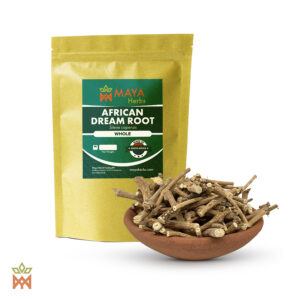
Many of our customers who explore Mukanya Kude also work with African Dream Root powder or whole African Dream Root. These plants are not the same, but they are often approached with a similar intention: to create a calm evening ritual and support a deeper relationship with dreams.
How to prepare shredded yellow fever tree bark
Mukanya Kude comes as shredded bark. This form is practical for traditional-style water preparations, incense blends, or personal ethnobotanical study. The Maya Team likes shredded bark because it keeps the plant material close to its natural form while still being easy to measure and handle.
- Start with a small amount of shredded bark.
- Simmer gently in water if making a traditional-style decoction.
- Strain well before use.
- Use in the evening when working with dream intention, quiet reflection, or journaling.
Because traditional preparations can vary widely, begin with care and keep your ritual simple. Many people combine dream herbs with a calm bedtime routine, a notebook beside the bed, and a clear question or intention before sleep.
If your interest is specifically lucid dreaming, Mukanya Kude may be explored as part of a broader dream practice rather than as a guaranteed effect. Dreams are personal, and plant traditions work best when approached with patience and respect.
Keeping shredded bark fresh at home
Store Mukanya Kude in a cool, dry, dark place. Keep the bag or jar closed after each use to protect the aroma and texture of the bark.
Avoid moisture, direct sunlight, and strong kitchen smells. Like many dried botanicals, shredded bark keeps best when handled with clean, dry hands or a clean spoon.
South African sourcing and ethical plant trade
Mukanya Kude is offered by Maya Herbs as a botanical from South Africa. We are proud to have this plant in our catalogue because it connects customers with African dream herb traditions in a careful, educational way.
Our work is rooted in long-term respect for traditional plant knowledge and the people who keep it alive. When customers choose to buy acacia xanthophloea bark from Maya Herbs, they choose a retailer that values clear information, careful handling, and an ethical approach to ethnobotanicals.
You can also find this species in our botanical index under Vachellia xanthophloea, reflecting the newer accepted name for the yellow fever tree.
Further reading on Acacia xanthophloea and the fever tree
- Ethnoveterinary Potential of Acacia (Vachellia and Senegalia) Species for Managing Livestock Health in Africa: From Traditional Uses to Therapeutic — by NNP Msimango, AO Aremu, SO Amoo, NA Masondo, 2025
The application of silver nanoparticles from Vachellia xanthophloea extracts showed excellent activity against Staphylococcus aureus and good related activity in laboratory contexts.
mdpi.com - Vachellia xanthophloea (Benth.) PJH Hurter (fever tree): Traditional and present uses, and future potential — by A Maroyi, 2024
This review discusses traditional and present uses of Vachellia xanthophloea, including interest in bark applications and future potential.
ethnobotanyjournal.org - Medicinal plants in JKUAT, their phytochemistry & pharmacological activity — by EK Malel, 2025
The article describes xanthophloea, also known as Acacia xanthophloea or fever tree, as an attractive semi-deciduous to deciduous tree.
ojs.jkuat.ac.ke
This product is sold as a botanical specimen. Information provided here is for educational and ethnobotanical purposes only. It is not intended to diagnose any ailment, or to treat, cure, or prevent any disease. Please check your local regulations before ordering botanical products.
Reviews
There are no reviews yet.