
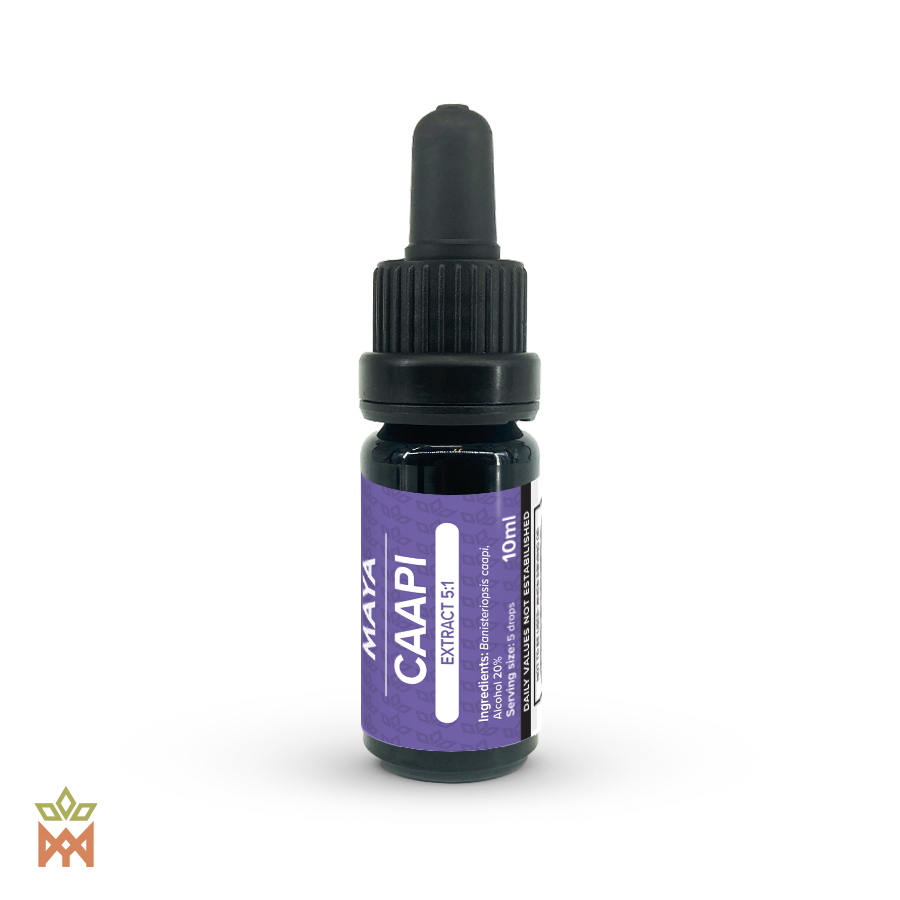


A concentrated extract of the Amazonian vine
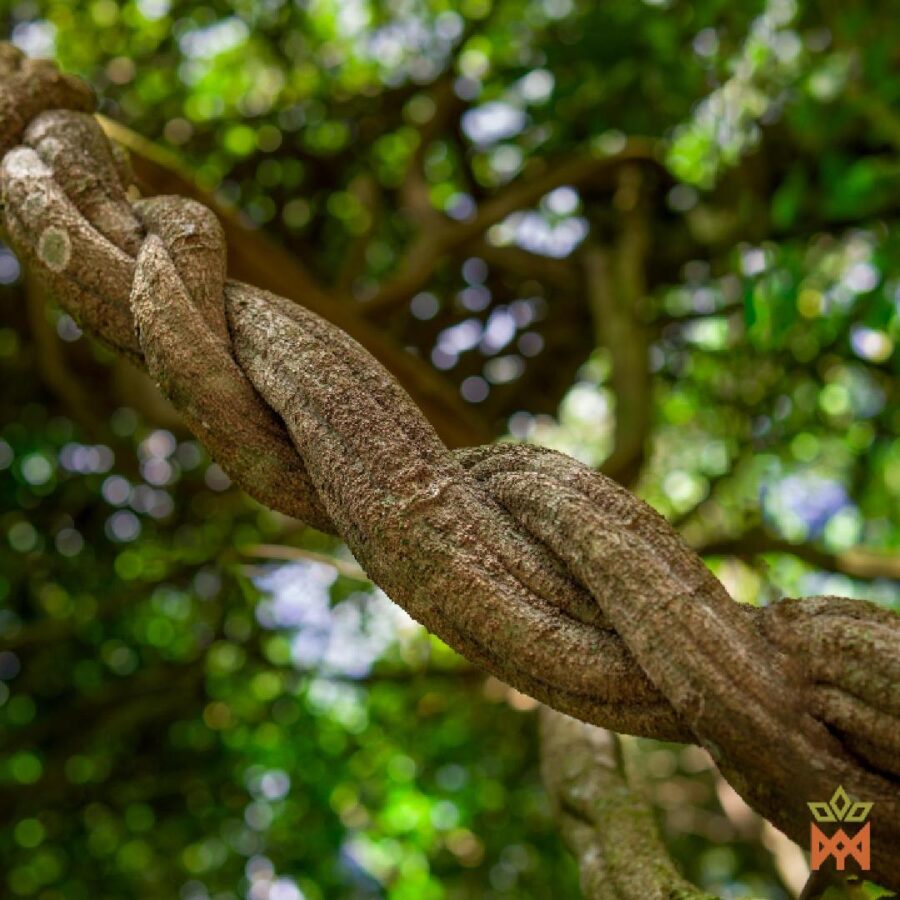
The woody vine behind this extract has a long history as a source of knowledge in Amazonian plant traditions. Here, Banisteriopsis caapi from Ecuador is presented as a low-alcohol 5:1 tincture made using ultrasound extraction. It brings a modern production method to a plant whose cultural importance extends far beyond its chemistry.
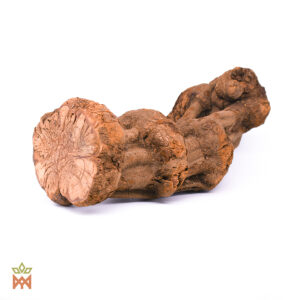
Caapi belongs to the Malpighiaceae family. It grows as a perennial forest climber, developing substantial woody stems, paired leaves and small flowers. The vine is the plant part used for this preparation.
The 5:1 formulation
The producer’s 5:1 designation describes five parts of vine represented in one part of extract. It is a material-to-extract ratio, rather than a measurement of harmine or a promise that the product has five times a particular effect. The specification does not state whether the starting weight is fresh or dried, so it cannot be compared directly with a fresh-vine ratio.
Ultrasound assists extraction through rapid pressure changes in the liquid. Tiny bubbles form and collapse, a process called cavitation, which can disrupt plant tissue and help soluble constituents move into the surrounding liquid. This is the principle behind the method used for our extract. The finished tincture is labelled 20% alcohol.
What a plant teacher means
In the Peruvian vegetalista traditions documented by Luis Eduardo Luna, practitioners regard certain plants as teachers. Through a disciplined apprenticeship, they seek knowledge of medicinal plants, songs and the perceived causes of illness. “Teacher” describes a relationship developed over time.
Songs were an important part of this learning. Practitioners described receiving them through relationships with plant teachers and later using them in their work as healers. This is the cultural background of the vine; the tincture is a contemporary extract preparation.
Caapi research and microdosing
Caapi contains β-carboline alkaloids, including harmine and harmaline, studied for their effects on the enzyme monoamine oxidase A. Laboratory activity is not the same as a demonstrated benefit from a retail tincture.
A 2024 phase 1 study examined pharmaceutical-grade harmine hydrochloride in 25 healthy adults. It assessed the tolerability and effects of a single administration; adverse effects increased with dose, with nausea, vomiting and drowsiness among the reported problems. The study did not test this tincture or repeated caapi microdosing, and it does not establish a daily regimen or a benefit for mood or concentration.
Maya works with local communities and suppliers committed to responsible harvesting, and each batch undergoes quality-control testing for purity, potency and consistency. The Cielo liquid extract 12:1 offers a separate preparation, described by its fresh-vine weight per litre.
Safety context: Caapi’s MAO activity can create serious interactions with medicines, including some antidepressants. Low alcohol does not remove this concern; medication must not be stopped or altered to accommodate an extract.
Selected references
- Luis Eduardo Luna (1984) — The concept of plants as teachers
- Wang and colleagues (2010) — Composition, standardization and chemical profiling of Banisteriopsis caapi
- Ables and colleagues (2024) — Phase 1 study of pure oral harmine in healthy volunteers
- Shen and colleagues (2023) — Ultrasound-assisted extraction: principles and equipment
This product is sold as a botanical specimen. Information on traditional, cultural and reported uses is provided for educational and ethnobotanical purposes only and is not a recommendation for any particular use. This product is not intended to diagnose, treat, cure or prevent any disease.
Reviews
There are no reviews yet.