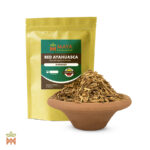

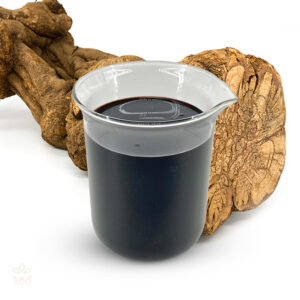
Red ayahuasca vine from Ecuador
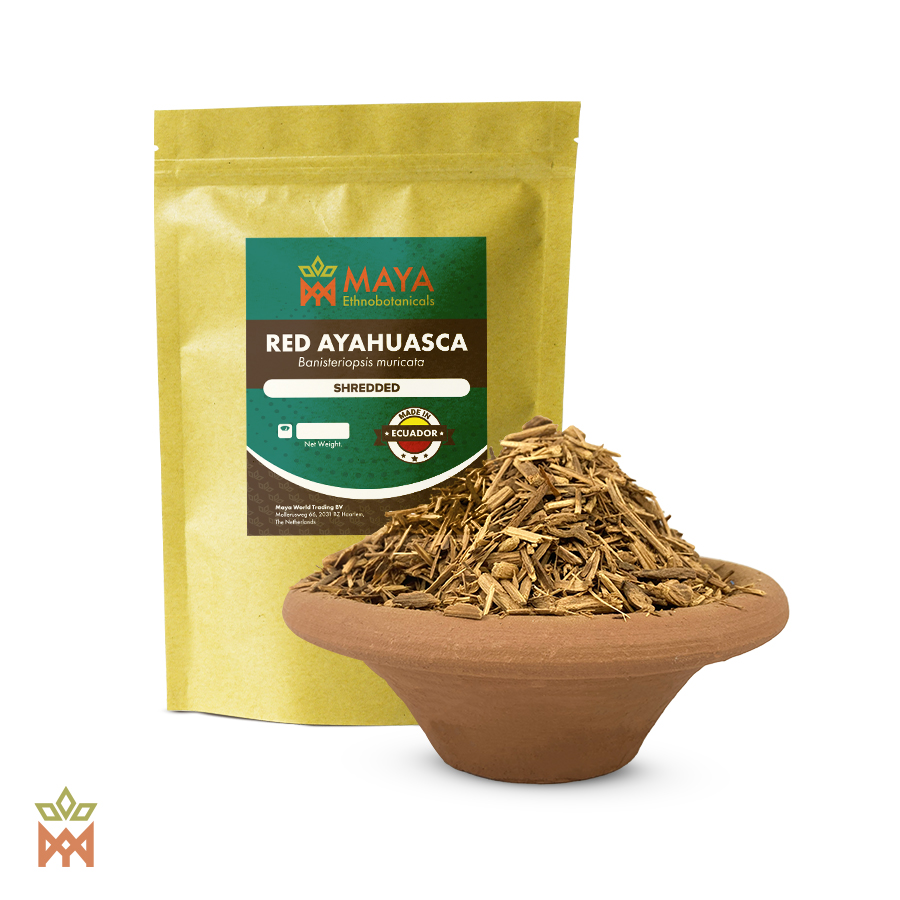
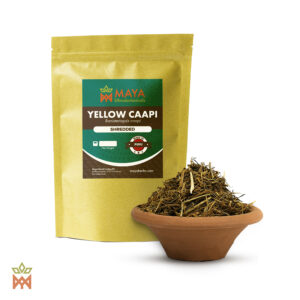
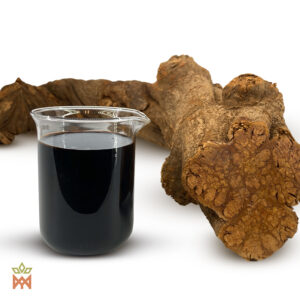
Ecuador’s Amazonian forests are home to several vines known through ayahuasca traditions. This red vine is supplied as Banisteriopsis muricata, a botanical relative of B. caapi with its own history. Maya sources the shredded vine directly from Indigenous harvesters through relationships with local Quichua communities.
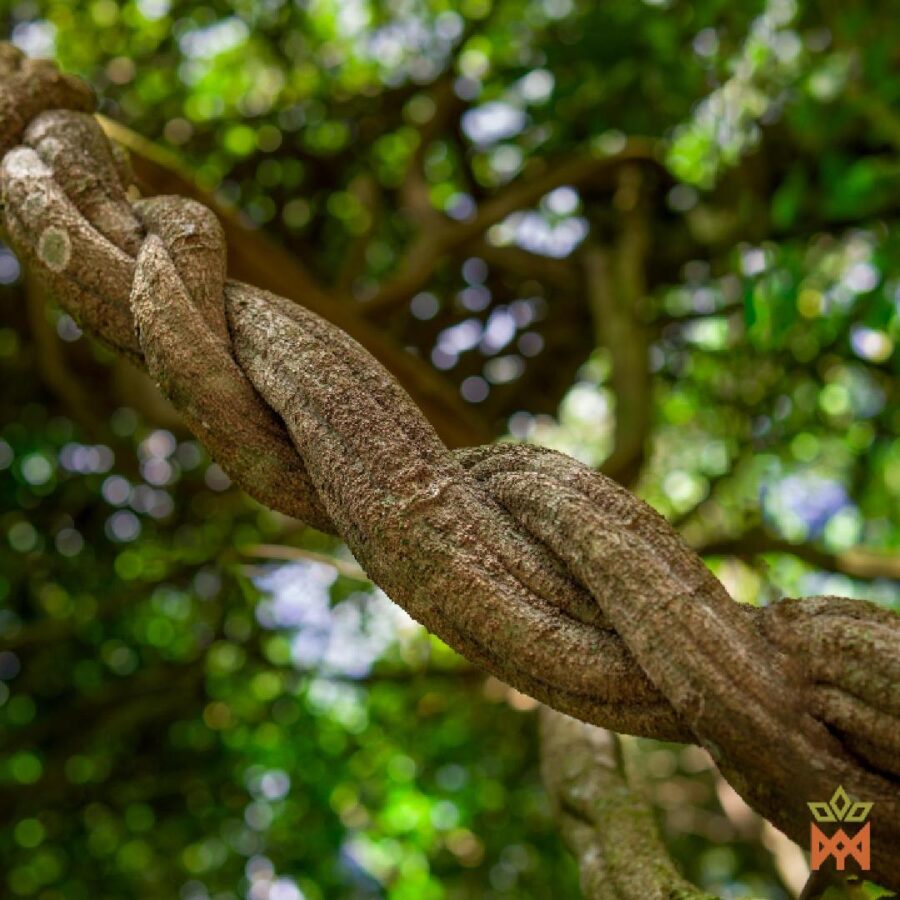
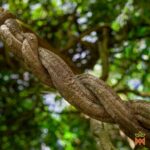
The species belongs to the Malpighiaceae family and occurs across a much wider area than Ecuador alone, from Mexico into tropical South America. It grows as a woody climber. Silky hairs on the undersides of its leaves can give them a silvery or golden appearance, while its small pink flowers develop into winged fruits.
A small detail with an ecological role
The leaves also bear tiny nectar-producing glands. A botanical study by Nery and colleagues examined these structures and their visitors, finding ants among the insects attracted to the secretion. This interaction places the vine within the everyday ecology of the forest, beyond the human uses for which it is better known.
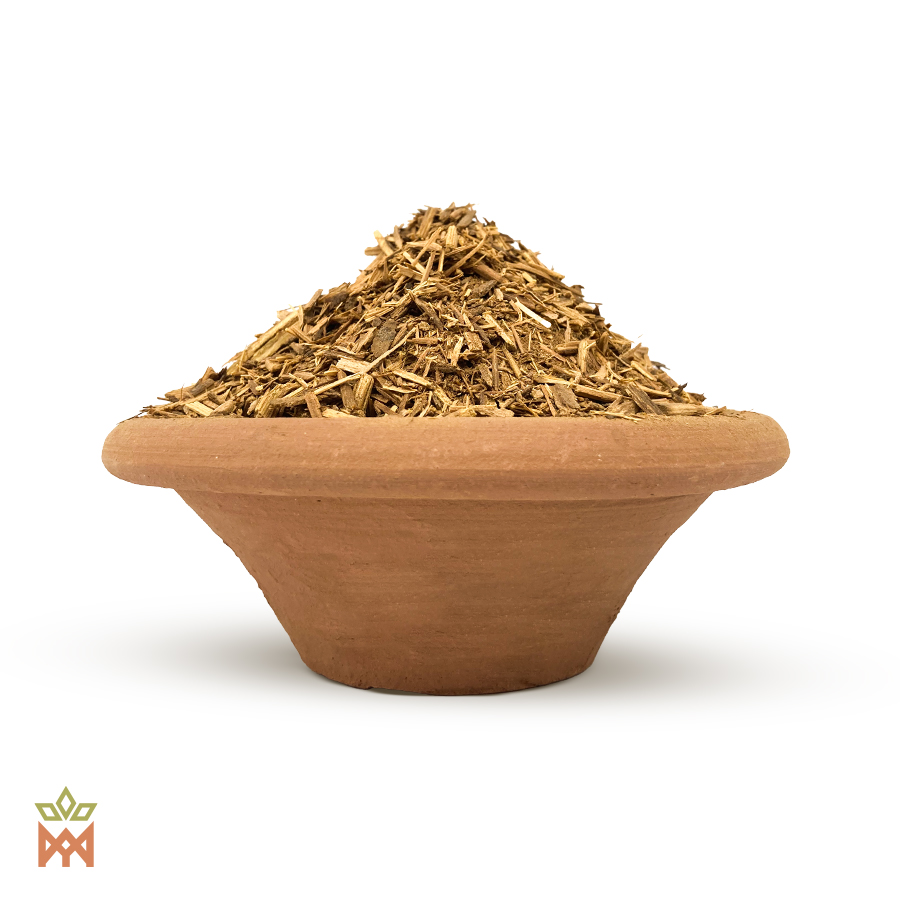
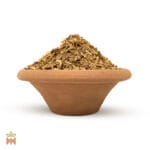
Together, the silky foliage, winged fruits and small leaf glands give the living vine a character of its own. The material offered here is its woody stem, supplied shredded.
A documented Ecuadorian tradition
Davis and Yost’s 1981 fieldwork, published in 1983, recorded B. muricata among Waorani people under the name mii. Their informants associated it with an ido, a ritual specialist believed to communicate with spirits implicated in misfortune. In this account, a specialist could also ask the spirits he had called upon to withdraw from the person affected.
This Waorani account is one documented strand of the vine’s Ecuadorian history. The Quichua communities who supply our product are a different people, with their own traditions and relationship with the plants they harvest.
Harvesting and provenance
Maya’s sourcing supports local Quichua harvesters through fair compensation. The vines are selectively pruned with regrowth in mind, and the harvested material is prepared as shredded vine. This direct relationship gives the product a specific Ecuadorian provenance.
Our red vine from Napo, Peru is another source of B. muricata. The Ecuadorian material here comes through Maya’s distinct relationship with Quichua harvesters, with selective pruning and fair compensation central to that partnership.
Selected references
- Royal Botanic Gardens, Kew — Banisteriopsis muricata: accepted name and distribution
- New York Botanical Garden — Banisteriopsis muricata, botanical description
- Nery, Vieira & Ventrella (2017) — Leaf glands of Banisteriopsis muricata
- Davis & Yost (1983) — Novel hallucinogens from eastern Ecuador, original field report
This product is sold as a botanical specimen. Information on traditional, cultural and reported uses is provided for educational and ethnobotanical purposes only and is not a recommendation for any particular use. This product is not intended to diagnose, treat, cure or prevent any disease.
Andrej (verified owner) –
This is Medicine!!!
The best vine I had, period. It changed my life.
Thank you Maya! Thank you Quichua tribe! Thank you holy medicine!
🙇🙏