



The Root Behind Xhosa Dream Traditions
Whole African Dream Root at Maya Herbs comes from the Eastern Cape of South Africa. Known commercially as Silene capensis, the plant also appears under the accepted botanical name Silene undulata. Its pale flowers develop their fragrance late in the day.
Ubulawu and the Meaning of Dreams
The South African National Biodiversity Institute records this root among the plants used in Xhosa ubulawu traditions. Its roots produce foam when agitated in water, a distinctive feature of recorded ceremonial preparations. Within these traditions, dreams can be understood as communication with the ancestors.
Sobiecki’s ethnobotanical fieldwork places ubulawu within a wider process of initiation, learning and healing. This context helps explain why African Dream Root has cultural significance beyond contemporary interest in lucid dreaming.
Whole Root and Related Forms
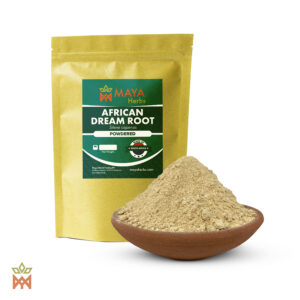
The whole-root format keeps the plant material visible and unmilled. The same botanical is available as African Dream Root powder, with the grinding already done, and as an alcohol-based African Dream Root tincture.
The Dream Herbs collection brings together other botanicals with their own plant traditions.
Research in Perspective
In a 2025 study of Silene undulata, Alhawarri and Olimat used LC-MS/MS—liquid chromatography coupled with tandem mass spectrometry—to investigate an extract. They reported 51 phytochemicals and modelled possible interactions with serotonin 5-HT2A receptors.
LC-MS/MS helps separate and identify constituents; molecular docking estimates how molecules might fit a receptor. The modelling generates hypotheses about biological activity, rather than measuring receptor activation in people.
This research contributes to understanding the plant’s chemistry, but did not test sleep, dream recall or lucid dreaming in human participants. It also did not analyse Maya’s whole-root product.
Storage
Keep the root sealed in a cool, dry place, away from direct sunlight.


Reviews
There are no reviews yet.