



A Seed Carried by Water
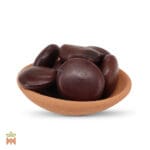
Known as African Dream Herb for its traditional association with vivid dreaming and dream recall, the Giant Sea Bean has a hard, smooth shell and a broad, flattened shape. Maya Herbs supplies the whole seed from Thailand. Familiar as Entada rheedii, the species appears under the accepted spelling Entada rheedei in current botanical references.
The Seed and the Giant Pod
This tropical climber belongs to the legume family, Fabaceae. Its woody, segmented pods can reach two metres in length and contain individual hard, dark-brown seeds. Botanical accounts describe the seeds’ dispersal by water, including their journeys on ocean currents.
The whole-seed format preserves the shell and the kernel within it. It offers a direct view of the plant material behind the names Giant Sea Bean, Snuff Box and African Dream Herb.
The Snuff Box Name
The name recalls a practical use of hard Entada seed shells as small containers. Nelson’s account of sea-bean boxes describes seeds hollowed out and fitted with lids or metal fittings to hold snuff or matches. This is a history of the seed coat as a useful material; the product offered here is the whole, unworked seed.
Traditional Dream Use
Entada’s reputation as African Dream Herb is connected with vivid dreaming and remembering dreams. Sobiecki’s ethnobotanical study records the seed, under the Zulu name umbhone, as used by South African diviners for dream recall.
SANBI’s botanical account places its dream use in the context of ancestral communication. Remembered dreams could be interpreted within the diviner’s practice; the interest was in their meaning as well as their vividness.
A Dream Talisman
The whole seed is also kept under a pillow as a dream talisman. A contemporary account of Zulu plant use describes placing intindili, another name for the Giant Sea Bean, beneath the pillow when dreams are unclear or troubling.
This gives the intact seed a place in dream work as a ritual object. SANBI also records seeds worn as good-luck necklaces and bracelets, documenting their wider amuletic role.
Research on the Seed Kernel
A study of Thai seed kernels published in 2012 investigated a methanol extract and isolated five previously unreported compounds alongside one known constituent. They included glycosides of entadamide A—compounds with sugar units attached to the underlying molecule. Chemical and spectroscopic evidence was used to establish their structures.
This work helps describe the chemistry inside the kernel, beyond the seed’s conspicuous shell. Its contribution is chemical identification; human sleep and dream outcomes were outside the study’s scope.
A processed form is available separately as Entada rheedii 50:1 dry extract. The Dream Herbs collection provides the broader botanical context.
Raw seed should not be treated as an ordinary edible bean: documented food traditions involve processing to remove toxic constituents.
Storage
Keep the seeds dry, away from heat, moisture and direct sunlight.
Selected References
- Royal Botanic Gardens, Kew — accepted botanical name.
- South African National Biodiversity Institute — Entada rheedii, dispersal and traditional uses.
- Nelson (1998), The Drifting Seed — sea-bean snuff boxes and match cases.
- Sobiecki (2008) — Entada’s recorded use by South African diviners for dream recall.
- Mnelisi.com — contemporary account of intindili beneath the pillow in Zulu plant practice.
- Sugimoto, Matsunami & Otsuka (2012; online 2011) — chemical investigation of Thai seed kernels.
This product is sold as a botanical specimen. Information on traditional, cultural and reported uses is provided for educational and ethnobotanical purposes only and is not a recommendation for any particular use. This product is not intended to diagnose, treat, cure or prevent any disease.


Reviews
There are no reviews yet.