



Carterii frankincense and the incense trade
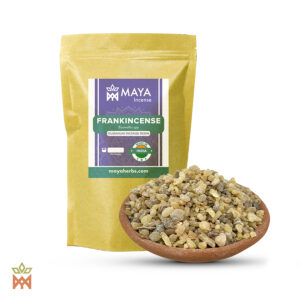
This Carterii frankincense is supplied in cut pieces, ready to warm as loose incense. Its fragrance develops as the resin heats, giving the material its familiar place in prayer, household incense and personal ritual. Also known as olibanum, frankincense has travelled between the dry landscapes where its trees grow and the places where its aroma is valued for many centuries.
A familiar name in frankincense
Carterii remains widely used as a commercial name for frankincense. The botanical name Boswellia carteri is treated by the Royal Botanic Gardens, Kew, as a synonym of Boswellia sacra. That species grows naturally in northern Somalia and parts of southern Arabia, in dry, often rocky surroundings.
The incense begins as an exudate from the tree’s bark and hardens into the resin that is collected and traded. It contains an aromatic oil fraction alongside resin and gum. Together, these components make up the aromatic material used as incense.
Resin carried across the ancient world
The frankincense trade helped sustain the ancient kingdoms of South Arabia. Resin travelled by sea towards Egypt and by camel caravan towards places such as Petra and Gaza, supplying religious ceremonies far from the growing regions. Its value lay in a material that could be carried, stored and brought to life again by heat.
For a different botanical origin, our Indian Serrata frankincense introduces the salai tree and its Indian incense tradition.
Using loose frankincense
Add a small piece to a fully lit incense charcoal disc in a heatproof burner, or use a burner intended for resin. Let the fragrance develop before adding more; the small pieces make it easy to work gradually. Store sealed in a cool, dry place.
Use in a ventilated space, away from children, pets and flammable materials. Never leave a hot burner unattended. Supplied for incense use, not for ingestion.

Reviews
There are no reviews yet.