


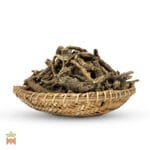
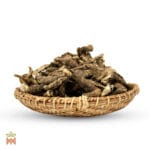

Osha, the mountain plant known as bear root
Osha is a strongly aromatic root with a history that reaches across the mountain country of the western United States and Mexico. The plant grows in the Rocky Mountains of the United States and the Sierra Madre Occidental of Mexico. Its regional names include bear root and the Mexican chuchupate. Maya offers whole root from Mexico, identified as Ligusticum porteri, a member of the parsley family, Apiaceae.

The root has an earthy, pungent character, very different from the delicate appearance of the leafy plant above it. Its reputation in regional herbal medicine grew around preparations for the throat and respiratory complaints. Its cultural history also extends into Lakota and Ute ceremonial life, where published accounts describe particular relationships with the root, its fragrance and the bear.
Osha in Lakota tradition
The Lakota connection is recorded in Culturally Important Plants of the Lakota, compiled by Linda Black Elk with cultural consultant Wilbur Flying By for Sitting Bull College. Their account identifies Ligusticum porteri as Osha or bear root and gives its Lakota name as mathó ṫhapȟéžuta. It records the root in ceremonial pipe use, alongside its place in traditional herbal preparations.
That association places Osha within Lakota ceremonial plant knowledge as well as the better-known herbal traditions of the Southwest and Mexico. It is a cultural relationship with the species, separate from the geographical origin of this particular root, which comes from Mexico.
Bear root in Ute knowledge
A 2021 ethnobotanical report made available by the Southern Ute Indian Tribe records accounts from Ute elders and other knowledge holders. Ute Mountain Ute elder Terry Knight explained that people learned about the root from bears, which dig and eat it when unwell. He translated a local Ute name as “bear’s food”. This is an account of Ute knowledge and relationship with the animal, rather than a clinical explanation of the plant’s effects.
Laverna Summa described autumn harvesting, attention to the root’s smell, and saying a prayer when collecting it. Her account includes spiritual cleansing and singers chewing the root when their throats became dry during ceremonies and powwows. Clifford Duncan recorded its sacred place in sweat ceremonies, while other accounts connected it with protection. These practices give the word “sacred” a specific setting: harvesting, prayer, singing and community ceremony.
Mexican herbal traditions and plant chemistry
Mexican research literature records chuchupate roots in infusions, decoctions and other traditional preparations. Scientists have investigated the root’s aromatic constituents, including a group of compounds called phthalides. One of these is ligustilide. The chemical profile also includes terpenoids and other substances, and changes with the plant material and extraction method examined.
A study of Osha collected in Colorado’s San Juan Mountains used gas chromatography and mass spectrometry to examine solvent extracts. It detected several dozen compounds. Other research has tested preparations and isolated constituents in experimental models of pain. These studies help describe the root and explore biological questions; they do not demonstrate that this whole-root product prevents infection, improves immunity or treats respiratory illness.
A root that takes time to grow
Osha’s place in trade also raises a practical botanical question: harvesting a root affects the plant differently from gathering a few leaves. Researchers describe it as slow-growing, with wild plants sometimes taking up to ten years to reach harvestable size. University research in the United States has therefore examined how wild populations recover from different levels of collection.
This ecological context adds depth to an already distinctive plant. The whole root offered here preserves its recognisable form and pungent character. Keep it dry and protected from excess heat and moisture. Explore other regional plant histories in our Well-being botanicals collection.
Selected references
- Linda Black Elk and Wilbur Flying By, Sitting Bull College: Culturally Important Plants of the Lakota (1998), Ligusticum porteri entry
- Ute ethnographic and ethnobotanical research, Bonita Peak Mining District (2021), Osha account
- Analysis of southwestern Colorado Ligusticum porteri by GC–MS (2023)
- Experimental study of Ligusticum porteri preparations and compounds (2013)
- University of Kansas: Osha population and harvesting research
- Terrell and Fennell: Osha growth and cultivation (2009)
This product is sold as a botanical specimen. Information on traditional, cultural and reported uses is provided for educational and ethnobotanical purposes only and is not a recommendation for any particular use. This product is not intended to diagnose, treat, cure or prevent any disease.

salvatore.pomaa (verified owner) –
💯