



A flowering vine with a history beyond its blossoms
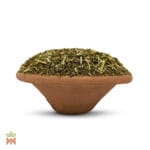
Purple passionflower is immediately recognisable by the fine violet-and-white filaments arranged around the centre of its flowers. Yet the herb used in herbal preparations is drawn from the vine’s aerial parts, including its leaves and stems, rather than from the blossoms alone. This cut Passiflora incarnata comes from Brazil. The species itself is native to central and eastern North America, where its edible fruits are widely known as maypops.
The vine climbs by coiling tendrils around neighbouring vegetation and supports. Its leaves are usually divided into three pointed lobes, while the elaborate flowers give way to rounded fruits. It belongs to the passionflower family, Passifloraceae, but should be distinguished from other species grown chiefly for commercial passion fruit.
Maypops and the meaning of passionflower
The plant’s relationship with people long predates its European name. Archaeological research in the southeastern United States has traced the use of maypops back to the Late Archaic period. The fruit became associated with places people cleared and cultivated, where the vine could flourish. The United States Department of Agriculture also records Captain John Smith’s 1612 account of Native Americans in Virginia planting the vines for their fruit. This is the history of a valued food plant, distinct from the later herbal reputation of its aerial parts.
The name Passiflora comes from a different cultural encounter. Christian missionaries interpreted parts of passionflowers as symbols of Christ’s Passion: the corona as a crown of thorns, the three stigmas as nails and the five anthers as wounds. That reading of the flower helped establish the name that remains in botanical and everyday use.
Herbal tradition and research
Passionflower herb became associated in Western herbal practice with preparations for restlessness and disturbed sleep. The European Medicines Agency describes the herbal material as the dried aerial parts, which may include flowers or fruits. Its assessment distinguishes a tradition of use from the stronger clinical evidence required to establish a medicine’s effectiveness.
The herb contains a mixture of flavonoids, including compounds related to vitexin and isovitexin. Researchers study these alongside the whole preparation, since the chemistry of a plant cannot be reduced to one presumed active ingredient.
A 2011 double-blind study examined passionflower herbal tea in forty-one healthy adults. Participants tried the tea and a placebo during separate one-week periods. Of six sleep-diary measures analysed, subjective sleep quality received a better rating with passionflower. The short study offers a specific reason for scientific interest, but it does not establish treatment of insomnia or predict the effect of this Brazilian herb.
Maya also offers Purple Passionflower liquid extract. Here, the focus is the cut herb itself: the leafy material of a remarkable climbing plant whose history brings together Indigenous food traditions, religious symbolism and the continuing study of herbal preparations.
Selected references
- Royal Botanic Gardens, Kew: native range of Passiflora incarnata
- Gremillion (1989): Humans and maypops in the southeastern United States
- USDA plant guide: Purple passionflower, botany and recorded Indigenous uses
- Missouri Botanical Garden: Passionflower structure and Christian symbolism
- European Medicines Agency: Assessment of Passiflora incarnata herb
- Ngan and Conduit (2011): Placebo-controlled passionflower tea study
This product is sold as a botanical specimen. Information on traditional, cultural and reported uses is provided for educational and ethnobotanical purposes only and is not a recommendation for any particular use. This product is not intended to diagnose, treat, cure or prevent any disease.

Reviews
There are no reviews yet.