



Grey copal and the fragrant resins of the Upper Amazon
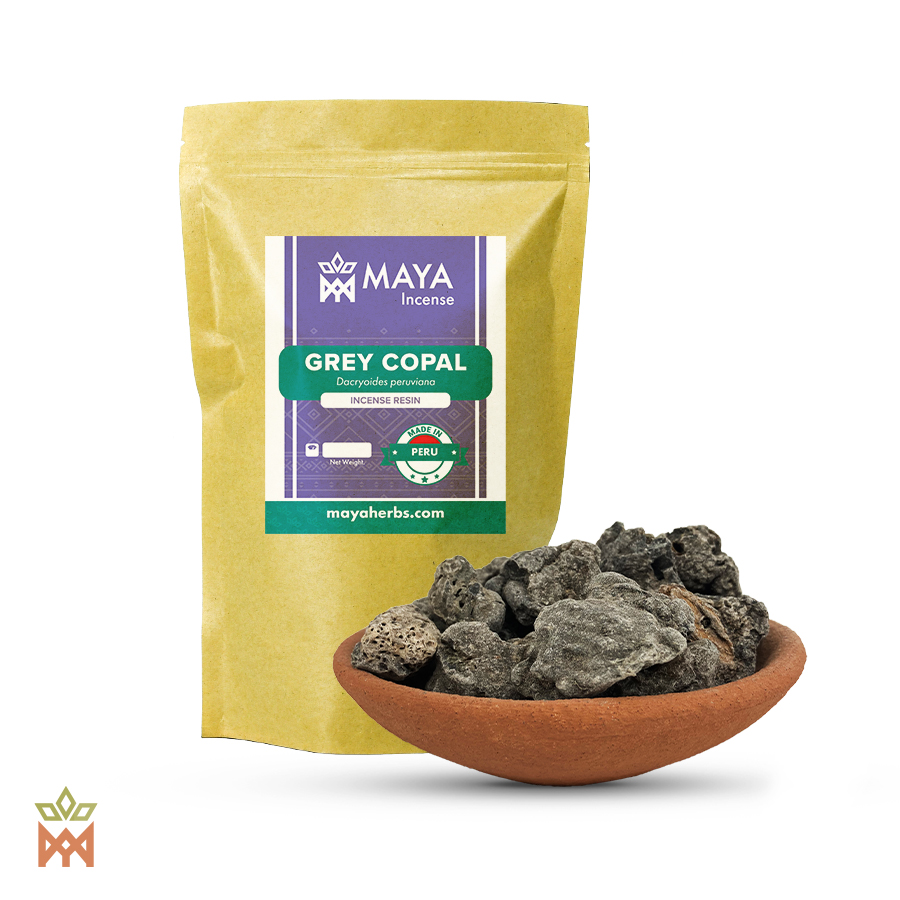
Peruvian Grey Copal is an aromatic resin from Dacryodes peruviana, a tree of the humid forests of northwestern South America. Its greyish pieces release an earthy, resinous fragrance when warmed. In the Upper Amazon, copal’s scent belongs to a wider history of household protection, ceremonial cleansing and relationships with the forest.
A resin-bearing forest tree
Dacryodes peruviana belongs to the Burseraceae, a family rich in aromatic resin-producing trees. Its native range includes Peru, Ecuador and Colombia.
Ethnobotanical records reveal a tree woven into everyday life as well as ceremony. Its fruit is eaten by people and forest animals, while its resin has been used for light, fire-making and craft.
Household protection in Cofán and Shuar accounts
Ecuador’s botanical records document the Cofán of Sucumbíos burning the resin of this species around homes to drive away unwelcome spirits. In southern Ecuador, fieldwork in the Shuar communities of Chumbias and Napints recorded Dacryodes peruviana as kunchai, with its resin burned in practices addressing mal aire.
In these neighbouring parts of the Upper Amazon, the same tree provides a resin whose fragrance is bound to the protection of the household. The smoke moves through a familiar, inhabited space as part of a practice connecting people with the forest and the unseen world.
Copal in the teachings of Pablo Amaringo
A Peruvian account comes from ethnobotanist Jonathon Miller Weisberger’s recollection of a visit to the artist and former healer Pablo Amaringo in Pucallpa in 1998. Amaringo spoke of copal as an “empire of spirits” and described its place in cleansing rituals accompanied by prayer. His account connects the resin with a living spiritual world and with the importance of the practitioner’s conduct.
For another South American resin tradition, explore Brazilian Sepa, or Breu Branco.
Warming grey copal
Place a small piece on a fully lit incense charcoal disc in a heatproof burner, or use a burner intended for loose resins. Let the earthy aroma develop before adding more. Store sealed in a cool, dry place.
Use in a ventilated space, away from children, pets and flammable materials. Never leave a hot burner unattended. Supplied for incense use, not for ingestion.
Selected references
- Royal Botanic Gardens, Kew — Dacryodes peruviana: accepted name and distribution.
- BioWeb / Plantas Útiles del Ecuador — species-specific uses recorded among Cofán, Shuar and other communities.
- Lyonia — fieldwork on Shuar forest-plant knowledge in Chumbias and Napints, Nangaritza.
- Jonathon Miller Weisberger — an account of Pablo Amaringo’s copal teaching, from Rainforest Medicine (2013), reproduced with permission.
Reviews
There are no reviews yet.