
The Red Water Lily
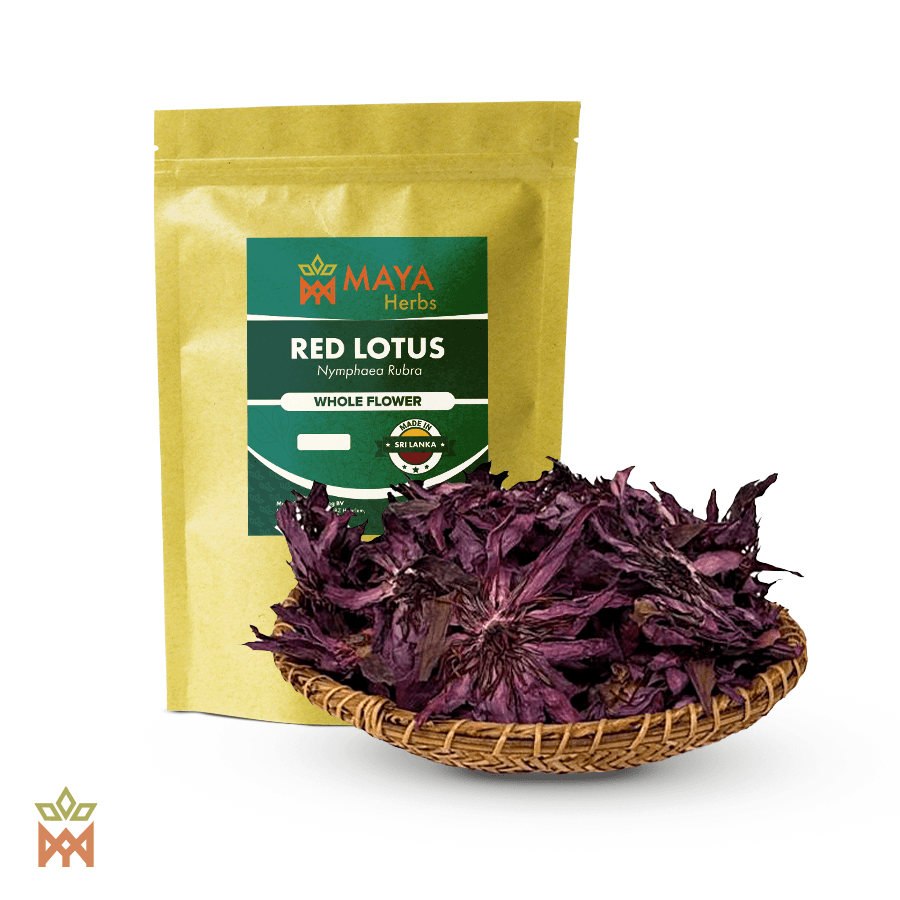
Red Lotus, scientifically known as Nymphaea rubra, is a tropical water lily admired for its deep red petals, gentle fragrance, and striking presence in ponds, lakes, and slow-moving waters. This whole flower product comes from Sri Lanka, a region where water lilies have long been appreciated for their beauty, symbolism, and traditional botanical value.
Although commonly called “lotus,” Nymphaea rubra is a water lily from the Nymphaeaceae family. It is botanically distinct from Nelumbo nucifera, the Sacred Lotus.
Botanical Information
Nymphaea rubra is an aquatic, rhizomatous plant that grows in warm, tropical environments. Broad floating leaves surround flowers that range from red to purplish-red. The living blooms open at night and close in the morning, repeating this rhythm over several days.
- Botanical name: Nymphaea rubra
- Common names: Red Lotus, Red Water Lily
- Family: Nymphaeaceae
- Plant part: Whole flower
- Origin: Sri Lanka
- Product form: Dried whole flowers
The name rubra refers to the plant’s red colour. The Royal Botanic Gardens, Kew recognises it as an accepted species with a native range that includes Sri Lanka.
Traditional & Cultural Significance
Water lilies have been valued across Asia as symbols of purity, renewal, beauty, and spiritual reflection. For Red Lotus specifically, the Royal Botanic Gardens Victoria records Nymphaea rubra as a sacred plant in Hindu tradition, often planted around temples.
Red Lotus flowers are especially appreciated for their warm colour and serene appearance. Their deep red tones give them a distinctive place in botanical collections, ritual settings, meditation spaces, and decorative arrangements.
Reported Character
In contemporary ethnobotanical use, Red Lotus is described as calming and mildly euphoric. These descriptions refer to reported experience and help explain interest in the flower for quiet, contemplative plant practice.
Aroma & Appearance
Our Red Lotus whole flowers are carefully dried to preserve their natural colour, structure, and botanical character. The flowers have a mild, floral aroma and a delicate texture, retaining the recognisable form of the water lily.
Research on the Flowers
Research on Nymphaea rubra flowers has identified a varied chemical profile, including flavonoids, tannins, and alkaloids. A study published in 2023 tentatively identified more than 100 constituents in flower extracts. A separate 2024 study reported nuciferine in a flower-extract fraction.
These studies examine the flower’s chemistry and laboratory or animal activity. They do not establish the calming or mildly euphoric character reported in contemporary use.
Red Lotus is supplied as a botanical specimen for collections and ethnobotanical interest. For related species and preparations, explore our Blue Lotus collection. Keep the dried flowers sealed, cool and dry, away from direct sunlight.
Information is provided for educational and ethnobotanical purposes. This product is not intended to diagnose, treat, cure, or prevent disease.
Selected References
- Royal Botanic Gardens, Kew — Nymphaea rubra: identity and native range.
- Royal Botanic Gardens Victoria — Hindu temple associations; Singapore National Parks Board — night-flowering habit.
- Naznin et al. (2023) — metabolite profiling of Red Lotus flower extracts.
- Ishrat et al. (2024) — flower constituents and experimental metabolic research.
Reviews
There are no reviews yet.